


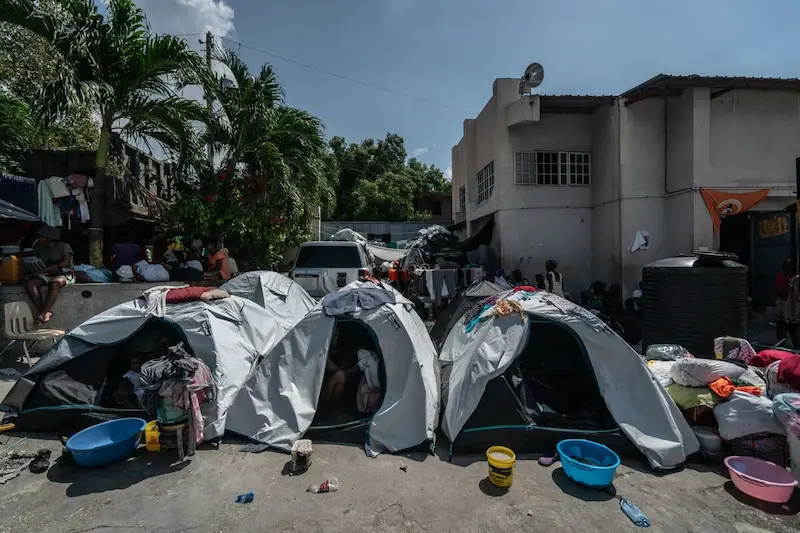


The escalating violence in Haiti's capital, Port-au-Prince, has forced an additional 40,000 people to flee their homes, intensifying an already dire humanitarian situation. Over the past two and a half months, hundreds of civilians have been killed, and tens of thousands have been displaced from neighborhoods surrounding the city, according to the United Nations' World Food Programme. With a total of more than 200,000 people displaced in the country of 11.7 million, a staggering 44% are now facing life-threatening hunger.
Haiti was already grappling with significant challenges before this recent wave of displacement, making it the country's worst humanitarian crisis since the devastating 2010 earthquake. Economic difficulties and climate-related problems had already plagued the nation. However, the primary driving force behind the growing hunger crisis in Haiti is violence and insecurity.
For over a year, Haiti has been appealing for international assistance to address the security situation, as its national police force has been unable to contain the well-armed gangs that have seized control of large areas in the capital. Recognizing the urgency, the UN Security Council approved a plan on October 2nd for Kenya to send approximately 1,000 troops to Haiti. Their deployment aims to help quell the violence and restore order, paving the way for long-awaited elections.
Unfortunately, the intervention plan has hit several hurdles, including legal challenges in Kenya itself. Reports from local press indicate that the Kenyan top court has scheduled a hearing on November 9th to determine the constitutionality of the deployment. Additionally, the country's national assembly has yet to debate the measure. These delays further impede the timely assistance that Haiti desperately needs.
The prolonged violence and displacement have left Haiti in a state of turmoil. The already strained resources, coupled with the lack of security, have created an environment where hunger and suffering are rife. The situation demands immediate attention and additional funding. Jean-Martin Bauer, the country director of the UN World Food Programme in Haiti, stresses that although economic struggles and climate-related issues contribute, violence and insecurity remain the driving factors behind the hunger crisis.
Ultimately, the people of Haiti continue to bear the brunt of this escalating violence and displacement. Urgent action is required, both in terms of security intervention and humanitarian aid, to alleviate the suffering and bring stability to a country already facing immense challenges. The international community must rally together to respond effectively to Haiti's distress call.