


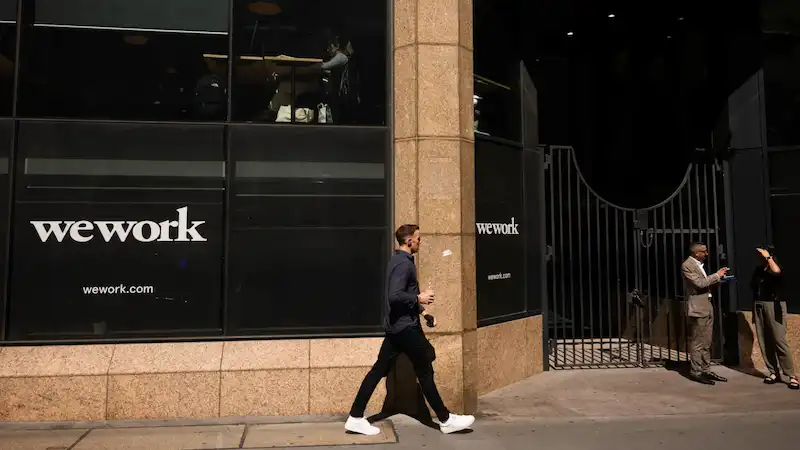


In a stunning turn of events, WeWork, once the world's most valuable startup, has filed for bankruptcy. The coworking space company's Chapter 11 announcement comes as no surprise, considering its struggles with debt repayment and the detrimental impact of the pandemic on its business.
With the rise of remote work, people shifted to working from home instead of commuting to office spaces, dealing a heavy blow to WeWork. The company's stock plummeted by over 99% in value, and its valuation shrank from a peak of $47 billion to a mere $45 million before the bankruptcy filing. However, WeWork remains determined to weather the storm, assuring its customers that it will stay open and operational as it renegotiates leases and debt obligations.
WeWork's CEO, David Tolley, stated in a news release that the company is focused on addressing its legacy leases and improving its balance sheet. Tolley emphasized their commitment to investing in products, services, and their talented team to support the WeWork community. Encouragingly, investors holding 92% of WeWork's secured debt have agreed to adjust the terms of their loans, demonstrating support for the company's future.
However, it's important to note that this bankruptcy filing only affects WeWork's outposts in the United States and Canada. The company's international locations remain unaffected at this time.
WeWork's downfall is quite remarkable considering its initial status as a celebrated tech unicorn set to revolutionize office work. The company's ambitious goals, complete with free-flowing craft beer, captivated many. However, adverse circumstances, including a failed attempt to go public in 2019, signaled the beginning of WeWork's unraveling. IPO paperwork revealed significant losses and potential conflicts of interest involving co-founder and former CEO Adam Neumann, who was eventually ousted under pressure from investors. Despite his departure, Neumann still received a substantial golden parachute.
Eventually going public in 2021 at a significantly reduced valuation of around $9 billion, WeWork struggled to restore market sentiment. Critics argued that the company, portrayed as a tech powerhouse, relied heavily on its real estate business rather than disruptive technology. Moreover, the pandemic-induced rise of hybrid and work-from-home options posed a considerable threat to WeWork's traditional office culture. Intensifying competition in the coworking space, higher interest rates, and macroeconomic uncertainty further cast a shadow on WeWork's attempts to rejuvenate itself.
Shares for WeWork have witnessed a staggering 98% plunge in 2023 alone. The leadership shakeup in May, with the departure of chairman and CEO Sandeep Mathrani, added to the company's challenges. David Tolley, a WeWork board member, took on the interim CEO role and was officially appointed CEO in October. Alongside these developments, WeWork expressed significant doubts about its ability to sustain its operations over the next year due to mounting losses and debt.
WeWork's bankruptcy filing serves as a sobering reminder of the unpredictable nature of the business landscape and the importance of adaptability in the face of evolving market conditions. However, the company's commitment to its community and the willingness of its investors to adjust loan terms may pave the way for a new chapter for WeWork.