


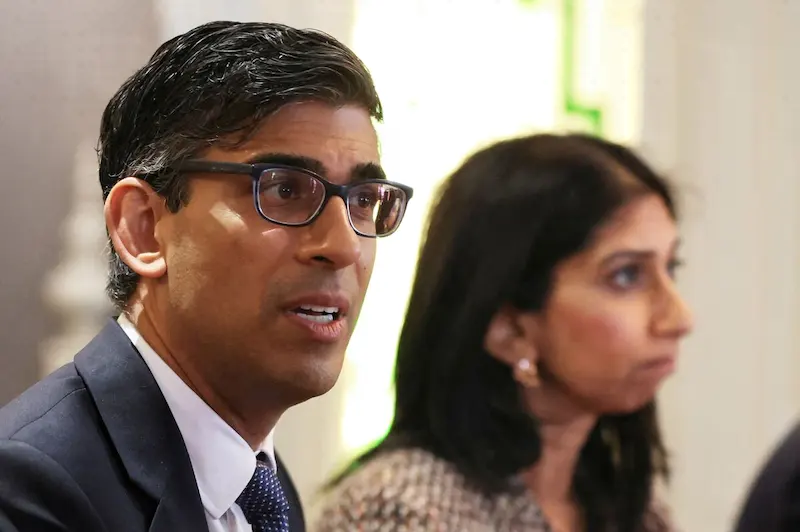


Rishi Sunak, the current Conservative Party leader and UK Prime Minister, finds himself in a difficult position due to the rebellious actions of his Home Secretary, Suella Braverman. Their alliance, which played a significant role in Sunak's rise to power, has come under scrutiny as Braverman's controversial re-appointment has caused tension within the party.
The similarities between Sunak and Braverman, including their Indian heritage and shared conservative values, initially cemented their alliance. However, their differences in approach have become apparent over time. Sunak is known for his technocratic style and reluctance to undermine institutions, while Braverman's power is built upon attack lines and challenging established norms.
Braverman's recent accusation of political bias against the Metropolitan Police in London has not only defied Sunak's attempts to manage the situation but has also strained their relationship further. This comes in the midst of a potential mass protest and counter-protests, raising concerns about potential violence. This isn't the first time Braverman has caused controversy, as she previously made comments criticizing British multiculturalism, which Sunak had to distance himself from.
For Sunak, the dilemma is complex. Removing Braverman from her position would risk alienating her supporters who played a role in Sunak's rise to power. Additionally, with an upcoming court ruling regarding the deportation of asylum seekers to Rwanda, Sunak cannot afford to misjudge the situation. If the ruling goes against the government, demands to leave the European Convention on Human Rights may intensify, further dividing the Conservative Party.
Some speculate that Braverman may be intentionally using provocative language in the hopes of being fired, which would position her as a martyr among right-wing Tories and potentially bolster her chances in a future leadership contest. Sunak must carefully weigh the consequences of either removing or retaining Braverman, considering the potential impact on party unity and his own authority.
On one hand, firing Braverman before the court ruling could help Sunak avoid accusations of weakness and indecision. It would also prevent her from further exploiting her position to influence the party's direction. However, Braverman's supporters argue that keeping her within the Cabinet maintains a sense of unity, especially if the court ruling goes in the government's favor. Additionally, Braverman's warnings about potential violence during the pro-Palestinian march this weekend could either prove prophetic or be used against her by critics.
Sunak finds himself at a crossroads and must make a decision. The choice he makes will have significant implications for his authority, party unity, and future leadership prospects. Whatever he decides, the current situation highlights the delicate balancing act that leaders often face when dealing with rebellious Cabinet members.