


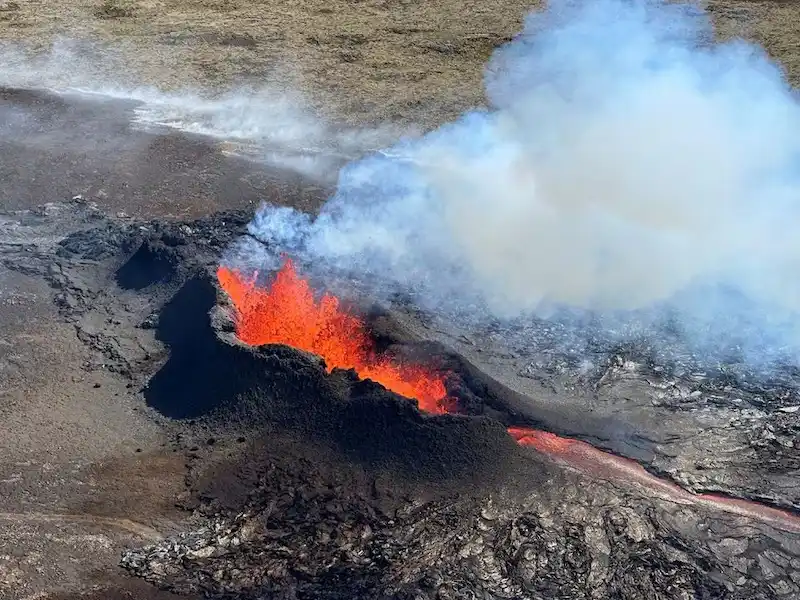


Icelandic authorities have completed the evacuation of around 3,000 residents from a town in the southwest of the island due to concerns of an imminent volcanic eruption. This move came after a series of earthquakes and evidence of underground magma movement in the Reykjanes peninsula. The Icelandic Meteorological Office has stated that there is a "considerable" risk of an eruption based on the size and speed of the magma intrusion.
Experts, including Thorvaldur Thordarson, a volcanology professor at the University of Iceland, have predicted that an eruption could occur within hours or a few days. The chances of an eruption have significantly increased. Given this prediction, Iceland's Civil Protection Agency ordered a complete evacuation of Grindavik, a nearby fishing town. It is important to note that while the evacuation was enacted swiftly, it was not declared as an emergency evacuation.
The Reykjanes region has witnessed several eruptions in recent years, but this current situation presents a more immediate risk to the town. The area's volcanic and seismic activity has been monitored closely, and on Thursday, heightened seismic activity prompted the closure of the famous Blue Lagoon geothermal spa, a major tourist attraction in Iceland.
Notably, in March 2021, the Fagradalsfjall volcanic system in the Reykjanes region experienced a stunning eruption, with lava fountains erupting from a fissure in the ground. This eruption lasted for six months and attracted thousands of Icelanders and tourists alike. Following this event, there was another eruption in the same area in August 2022, and yet another one in July of this year.
The Fagradalsfjall volcanic system, spanning approximately 6 km wide and 19 km long, had remained inactive for over 6,000 years prior to these recent eruptions. The volcanic activity in the Reykjanes peninsula has become an interesting and dynamic phenomenon for scientists and visitors alike. However, the current situation demands increased caution and swift action to ensure the safety of the affected residents.
As the evacuation of Grindavik is underway and the region braces itself for a potential eruption, authorities and experts will continue to closely monitor the volcanic activity to provide timely updates and take necessary precautions to protect lives and property.