


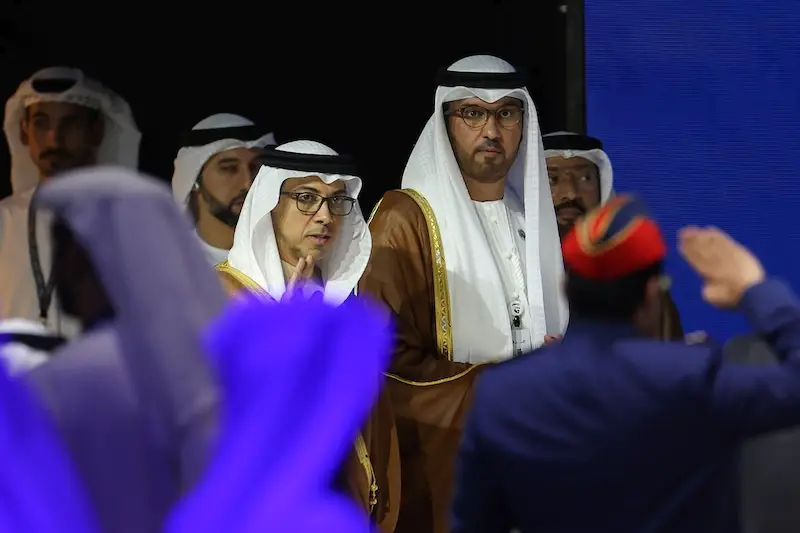


Newly leaked internal documents have shed light on the controversial presidency of COP28's president, Sultan Al Jaber. According to the documents, obtained by a whistleblower and published by the British Broadcasting Corp. (BBC) and the Centre for Climate Reporting, Al Jaber was willing to discuss oil and gas commercial interests during climate meetings with foreign governments ahead of the upcoming United Nations summit in Dubai.
Al Jaber, who also serves as the CEO of the Abu Dhabi National Oil Co., one of the largest oil producers in the world, has faced criticism for potential conflicts of interest in his role as COP28 president. The leaked documents, which include over 150 pages of briefings for meetings held by Al Jaber between July and October, appear to support these concerns. They reveal that discussions about oil and gas commercial interests were among the talking points during these meetings, and at least one nation followed up on these discussions.
Furthermore, the leaked documents also contained briefing points related to Masdar, the renewable energy company chaired by Al Jaber. While it is crucial to address the transition towards renewable energy, critics argue that the COP28 president's position as the CEO of a major oil company raises concerns about bias and conflicts of interest.
The revelations come just days before COP28 is scheduled to begin in Dubai, with over 70,000 attendees expected to participate. This year's climate meeting takes place amid increasing concerns about the devastating impacts of climate change, intensified by greenhouse gas emissions. The world is witnessing extreme weather events and rising global temperatures, making it crucial for countries to reach diplomatic agreements to prevent further environmental catastrophe.
In response to the BBC report, a spokesperson for the COP28 presidency dismissed the leaked documents as inaccurate and not used in meetings. However, the publication of such documents raises questions about transparency and raises concerns about the impartiality of climate discussions.
The European Union's climate commissioner, Wopke Hoekstra, commented on the report, stating that countries in the Middle East, like the UAE, must move away from the fossil fuel industry. Hoekstra emphasized that ambitions for climate action cannot be slowed down or hidden, and the focus should be solely on addressing the climate crisis.
One particular aspect highlighted in the leaked documents is Al Jaber's apparent intention to lobby Brazil's Minister of the Environment and Climate Change, Marina Silva, regarding Abu Dhabi National Oil Co.'s bid for the Brazilian petrochemical company Braskem. Silva, an environmentalist and former candidate for the Green Party in Brazil, raises concerns about potential conflicts of interest and the lack of impartiality on the part of the COP28 president.
Environmental organizations, such as Greenpeace International, have expressed their disappointment regarding these revelations. They argue that the climate summit leader should prioritize advancing climate solutions rather than engaging in backroom deals that contribute to the crisis. The appointment of a CEO from an oil company as the COP28 president has reignited concerns about conflicts of interest and has drawn attention to the need for transparent and impartial leadership in global climate negotiations.