


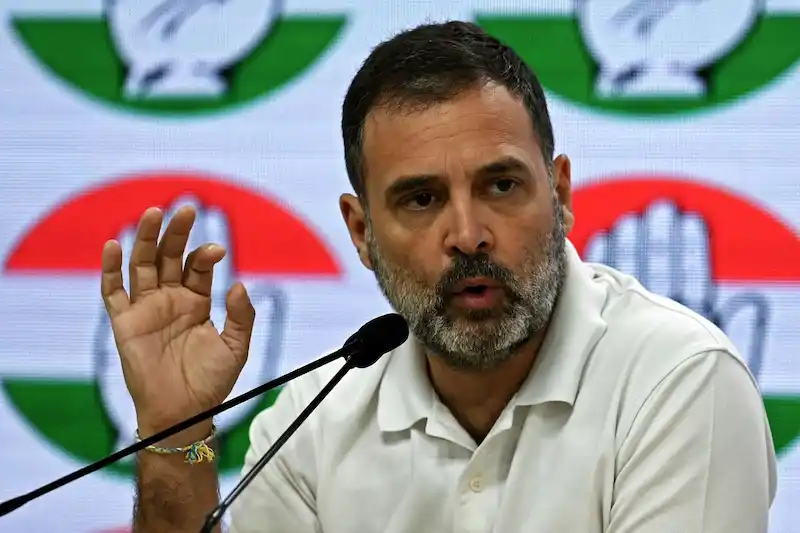


Cracks have started to appear within India's opposition alliance following Prime Minister Narendra Modi's resounding victory in recent state elections. The Bharatiya Janata Party (BJP), led by Modi, secured a clear mandate to govern in three out of the five states that voted in November. In contrast, the main opposition party, the Indian National Congress, managed to win only one state. This unexpected outcome has led to discontent among the opposition alliance, which was formed with the intention of defeating Modi and his party in the 2024 national elections.
The Indian National Congress, led by Rahul Gandhi, had scheduled a meeting of senior opposition leaders for Wednesday to discuss strategy. However, this meeting was abruptly rescheduled after several influential members expressed their unavailability. Mamata Bannerjee, from the Trinamool Congress and the Chief Minister of West Bengal, publicly stated her other commitments prevented her from attending. These developments have raised concerns and doubts among opposition leaders about the Congress party's decision to exclude itself from the alliance partnership in the state elections.
Opposition leaders have also criticized the Congress party for appearing to use the state elections as a means to gain more bargaining power within the alliance. By contesting the elections independently, Congress had hoped to secure a stronger position, but this tactic has backfired. Omar Abdullah, a senior opposition member and leader of a regional party in Jammu and Kashmir, criticized Congress for only remembering the alliance after the state elections had concluded.
The recent state election results have cast doubt over the ability of the Congress-led alliance, consisting of more than two dozen political parties, to overthrow Modi and the BJP in the upcoming national elections. Neerja Chowdhury, an author and political columnist, noted that Congress had expected to win in at least two states but instead suffered a significant defeat in the Hindi heartland, where it sought to consolidate its support.
Modi and the BJP have dominated Indian politics for nearly a decade, employing a combination of Hindu nationalism and promises of economic development. Modi's government has targeted low-income voters, particularly women, by providing substantial cash handouts and subsidies. The state election results revealed that while Congress managed to increase its vote share in the southern state of Telangana, so did the BJP. In Chhattisgarh, the ruling BJP secured 39 more seats than in the previous election, successfully drawing votes away from Congress and regional parties.
Despite grievances within some opposition parties over Congress's independent strategy during the state elections, Sanjay Raut, a senior regional party leader, affirmed that the opposition alliance remains strong and receives their support. Moreover, recent events may actually offer the allied parties more leverage, as it could facilitate the process of seat adjustments, according to Chowdhury.
Rahul Gandhi acknowledged the party's defeat and affirmed that the "battle of ideology will continue." Yet, the main hurdle facing the opposition remains Narendra Modi himself. A charismatic and popular leader, Modi extensively campaigned across the states for a month, urging voters to trust him and his promises for a better future. Modi presented himself as the leader who can not only secure India's place on the global stage but also bring prosperity to the country's vast population of 1.4 billion individuals.