


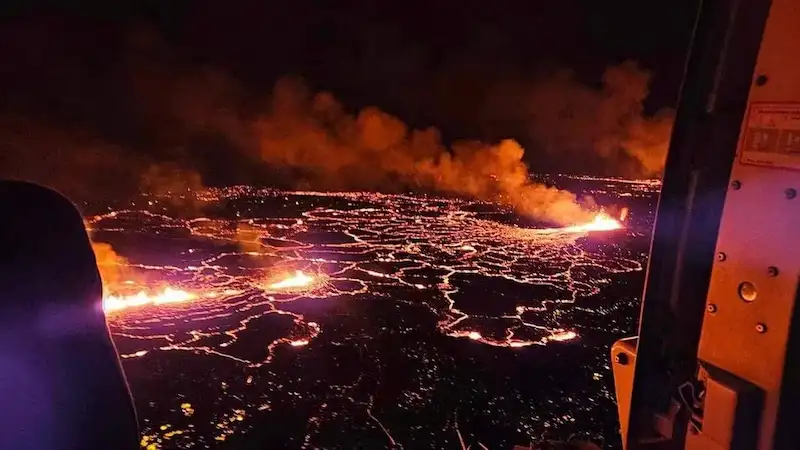


A volcanic eruption took place late on Monday on Iceland's Reykjanes Peninsula, marking the culmination of weeks of intense earthquake activity. The eruption spewed lava and smoke across a wide area, causing concern for the nearby town of Grindavik, which is the only inhabited area in the vicinity. As a precautionary measure, the town's 4,000 residents were evacuated in November when seismic activity intensified. The roads in the region have also been closed. The volcano sits approximately 30 km away from the capital, Reykjavik, and is in close proximity to Keflavik international airport and the famous Blue Lagoon geothermal spa, both of which have been affected due to the ongoing seismic events.
The Reykjanes Peninsula is known for its multiple volcanic systems, with around five to six different systems in the area. The current eruption that occurred on Monday is part of the Svartsengi volcanic system, which differs from the nearby Fagradalsfjall system that erupted in 2021 and 2022. Geologists have observed that the lava is flowing away from Grindavik towards uninhabited areas.
While the initial lava flows were intense, the volume has decreased from 200-250 cubic meters per second during the first two hours of the eruption to approximately a quarter of that on Tuesday morning. Although it is typical for fissure eruptions to diminish after an initial burst, experts suggest that this eruption may continue for some time. The recently formed crack in the Earth's surface measures about 4 km long, with its southern end situated around 3 km from Grindavik.
Volcanology researchers at the University of Iceland have warned about the potential for air pollution if the eruption continues at its current intensity. However, there is a positive aspect in terms of wind patterns. The current forecast indicates that the wind will remain northwesterly and blow the eruption plume away from densely populated areas. This offers some relief as it decreases the immediate risk to human health.
Comparisons have been drawn to the notorious Eyafjallajokull eruption in 2010, which caused widespread disruption to air travel in Europe. However, unlike that particular event, the Reykjanes volcano systems are not located beneath glaciers. Thus, the occurrence of a significant ash cloud is not expected. Despite this, the ongoing eruption and resulting lava flows pose a risk to the immediate vicinity and necessitate careful monitoring by authorities and scientists.
Iceland's unique geographical location, situated between the Eurasian and North American tectonic plates, makes it prone to seismic and volcanic activity as the plates move apart. The recent eruption on the Reykjanes Peninsula is the fourth to occur in the area in recent years, with the last significant eruption happening in 2021. These eruptions have attracted considerable attention, with thousands of Icelanders and tourists visiting to witness the stunning display of volcanic activity.
As the eruption on the Reykjanes Peninsula unfolds, authorities will continue to assess and manage the situation to ensure the safety of nearby communities. While the immediate impact is concerning, Iceland's resilience in handling previous eruptions offers hope that they will weather this latest geological event with caution and preparedness.