


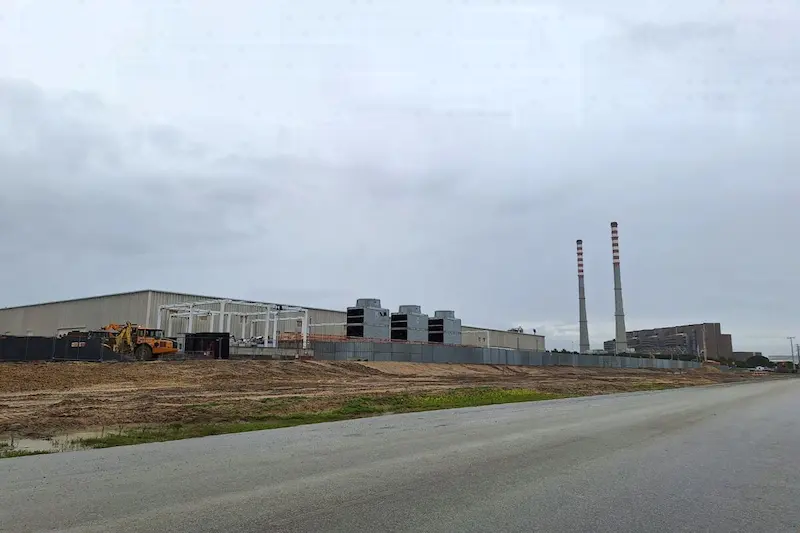


Portugal's race towards a modern, green economy has hit a roadblock as the country finds itself embroiled in a scandal involving allegations of government corruption. The scandal centers around a major data center project in the town of Sines, which is under investigation for suspected influence peddling in the planning process. The fallout from this scandal has not only shaken the political landscape but also highlighted deep-rooted discontent among the populace.
The €3.5 billion development in Sines was meant to be a landmark project, showcasing Portugal's commitment to clean energy and technological advancement. However, the investigation has raised serious concerns about government officials being swayed to expedite the project's progress. While the legal proceedings could take years to conclude, the political ramifications are already being felt.
Prime Minister Antonio Costa, who had been re-elected with a landslide victory two years ago, found himself at the center of the storm. Despite denying any wrongdoing, he resigned from his position shortly after his chief of staff was arrested and cash envelopes were found in their office. Costa's resignation has paved the way for an election on March 10, with his Socialists currently leading in the polls. However, the rise of far-right movements and a significant number of undecided voters inject uncertainty into the political landscape.
The scandal has highlighted the frustrations of many Portuguese citizens who feel their economy is lagging behind that of once-poorer Eastern European nations. Low wages, a sluggish legal system, and political cronyism have further exacerbated the discontent. Costa's promise to revamp the economy through green and digital projects, as well as address the housing crisis, has seemingly fallen short, and the opposition parties are keen to capitalize on these failings.
The data center project is not the only focus of the investigation. Two lithium exploration contracts are also under scrutiny, as Portugal seeks to tap into the growing demand for the mineral used in electric vehicle batteries. While the companies involved assert their adherence to the law, investigators have made visits and searches at their locations.
The scandal raises questions about the transparency and integrity of government processes in Portugal. Costa's tenure has also been criticized for its reliance on a small, close-knit group of trusted individuals, which has fueled perceptions of political favoritism and nepotism.
Nevertheless, the Sines data center project, despite being caught in the midst of the controversy, continues to move forward. The company behind it, Start Campus, remains committed to the project, confident in its potential to create thousands of direct and indirect jobs. However, the elections are likely to keep the controversy surrounding the data center project in voters' minds, with opposition parties aiming to exploit any doubts or concerns.
Overall, Portugal finds itself at a critical juncture. The scandal has not only jeopardized its aspirations for a modern, green economy but also exposed fundamental issues within its political and governance systems. The outcome of the upcoming election will determine the country's future trajectory and potentially shape its ability to attract investments and address pressing societal challenges.