


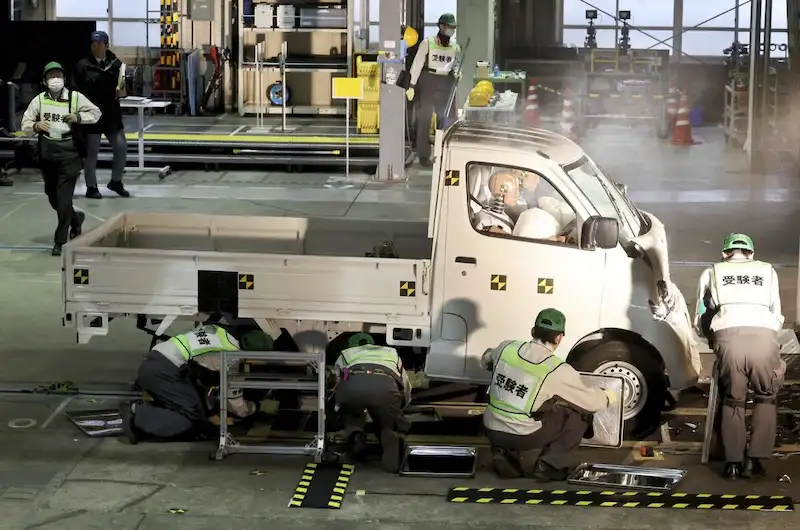


Daihatsu, a subsidiary of Toyota, is facing a major setback as the Japanese car manufacturer and supplier grapples with a safety scandal that has led to the revocation of certification for three of its vehicles. The discovery of manipulated test results in early 2023 initially raised concerns about a few models, but a recent internal investigation by Daihatsu uncovered 174 irregularities across 64 cars dating back to 1989. The repercussions of this scandal are significant, as it not only affects Daihatsu's operations but also has implications for Toyota and its partner companies.
The suspension of domestic operations until the end of January is just the beginning for Daihatsu, as the authorities weigh in and the true extent of the fallout becomes clear. The financial burden associated with regaining certification, rebooting production, and compensating numerous partners is expected to be overwhelming for Daihatsu. Bloomberg Intelligence senior auto analyst, Tatsuo Yoshida, believes that Toyota might have to step in to handle the situation if Daihatsu cannot bear the costs. This indicates a potentially complex future for the affiliate as Toyota contemplates a new structure for the company going forward.
Daihatsu's reputation as a manufacturer of popular lightweight vehicles, particularly kei cars in Japan and Southeast Asia, adds another layer of complexity to the scandal. The impact of the certification revocation and operational suspension will not be limited to Daihatsu alone, as it affects vehicles produced by the company both in Japan and overseas. Moreover, Daihatsu's role as a supplier of parts and manufacturing services to other automakers such as Mazda Motor Corp. and Subaru Corp. raises concerns about the possible repercussions on their operations as well.
The underlying issue, as identified by Toyota CEO Koji Sato, seems to be a shift in focus from improving the carmaking process to reducing production time. This emphasis on speed rather than quality control has ultimately led to the manipulation of test results and the compromising of safety standards. As the transport ministry demands that Daihatsu implement preventative measures within a month, the overall implications for the company and its partners become increasingly evident.
The Daihatsu safety scandal serves as a stark reminder of the importance of stringent quality control measures in the automotive industry. It highlights the need for manufacturers to prioritize safety and integrity in their operations. As the aftershocks of this scandal ripple through the automotive sector, it remains to be seen how Daihatsu, Toyota, and their associated partners will navigate the resulting challenges and restore trust among consumers and stakeholders alike.