


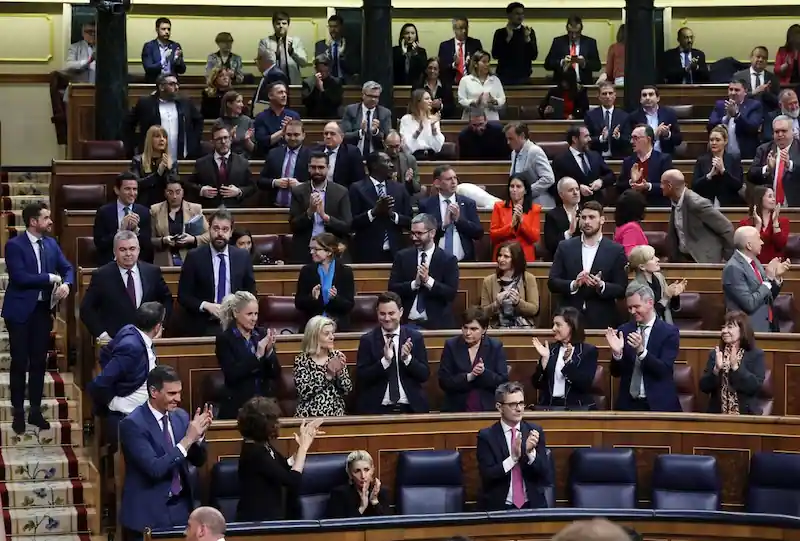


Spanish Prime Minister Pedro Sanchez has successfully brokered an agreement with a coalition of Catalan lawmakers to pass an amnesty law for hundreds of separatists, bringing an end to more than six months of arduous negotiations that had brought legislative progress to a standstill. The legislation, narrowly passed by a vote of 178 to 172 in the Spanish parliament, marks a significant development in the ongoing political saga surrounding Catalonia's push for independence.
This milestone comes hot on the heels of Catalonia's regional President Pere Aragones calling for snap elections on May 12, adding a new layer of complexity to the already intricate political landscape in Spain. However, the agreement on the amnesty law had already been reached prior to Aragones' announcement, positioning it as a central point of contention in the upcoming elections, where its impact on both the separatist parties and the ruling Socialists will be closely scrutinized.
The amnesty law paves the way for numerous pro-independence activists to avoid potential criminal charges, presenting a glimmer of hope for the return of former regional Catalan president Carles Puigdemont. Puigdemont, who fled Spain in 2017 to evade arrest following the failed 2017 independence bid, has been a key figure in the negotiations surrounding the amnesty and could potentially reenter Spanish politics should the law take effect.
With Puigdemont's Junts per Catalunya party and Aragones's ERC party at odds, the looming Catalan elections are set to be a battleground for political dominance between these two factions and the ruling Socialists, led by Sanchez. The results of the election will likely determine not only the distribution of power in Catalonia but also the broader implications for Spain's political landscape.
Sanchez's willingness to compromise on his previous stance against amnesty, despite facing backlash from competitors and even within his own party, underscores the lengths to which he is willing to go to maintain his grip on power. The passage of the amnesty law represents a strategic move for Sanchez, who may have calculated that embracing this controversial measure was necessary in the face of mounting political pressure and uncertainty.
However, the journey for the amnesty law is far from over. Following its approval in parliament, the legislation must now navigate the opposition-controlled Senate, introducing a further layer of scrutiny and potential roadblocks. Should the Senate reject the law, it will return to the parliament for a second vote, prolonging the process and setting the stage for continued political maneuvering and debate.