


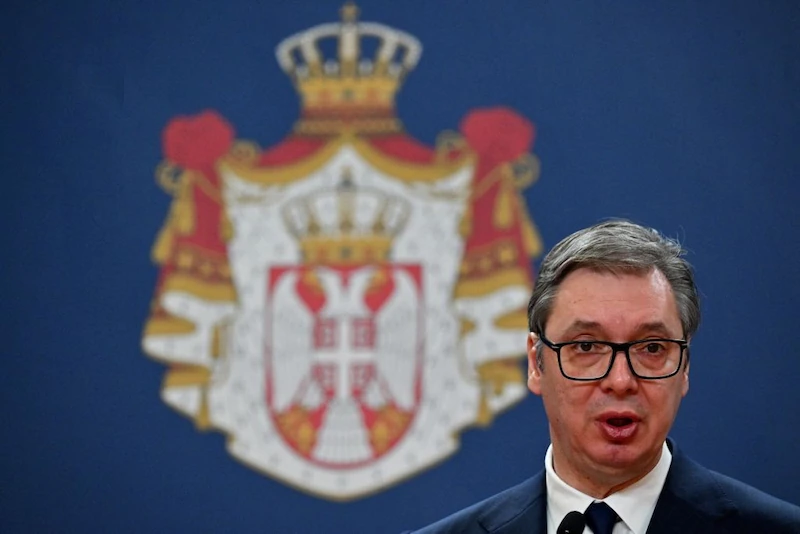


In a bold move that underscores Serbia's staunch refusal to recognize Kosovo's independence, President Aleksandar Vucic has stated that Serbia would contemplate leaving the Council of Europe if its former province Kosovo is granted admission into the human rights and rule-of-law organization. The longstanding dispute between the Balkan neighbors dates back to Kosovo's unilateral declaration of independence in 2008, following a violent conflict over the region. Despite the majority of Council of Europe members recognizing Kosovo as an independent state, Serbia has vehemently opposed its membership in international bodies.
President Vucic's remarks come at a crucial juncture in the ongoing efforts by the European Union to mediate discussions between Serbia and Kosovo, with the admission of Kosovo into the Council of Europe emerging as a contentious issue. The potential acceptance of Kosovo's bid to join the organization is viewed by Serbia as a direct affront, with Vucic warning that such a move would effectively result in Serbia being expelled from the Council.
The territorial dispute over Kosovo remains a deeply entrenched issue for Serbia, which continues to assert its claim over the region, while also garnering support from nations like China and Russia in contesting Kosovo's sovereignty. The exclusion of Russia from the Council of Europe in 2022 in the aftermath of its invasion of Ukraine further complicates the delicate geopolitical dynamics at play in the Balkans.
As both Serbia and Kosovo harbor aspirations of joining the European Union, the normalization of their relations stands as a crucial prerequisite for potential EU membership. The complex interplay between historical grievances, political alliances, and geopolitical considerations underscores the intricate challenges that must be navigated in order to achieve lasting peace and stability in the region. The fate of Serbia's membership in the Council of Europe may pivot on the resolution of the Kosovo question, highlighting the intricate web of diplomatic complexities that continue to shape the Balkan landscape.