


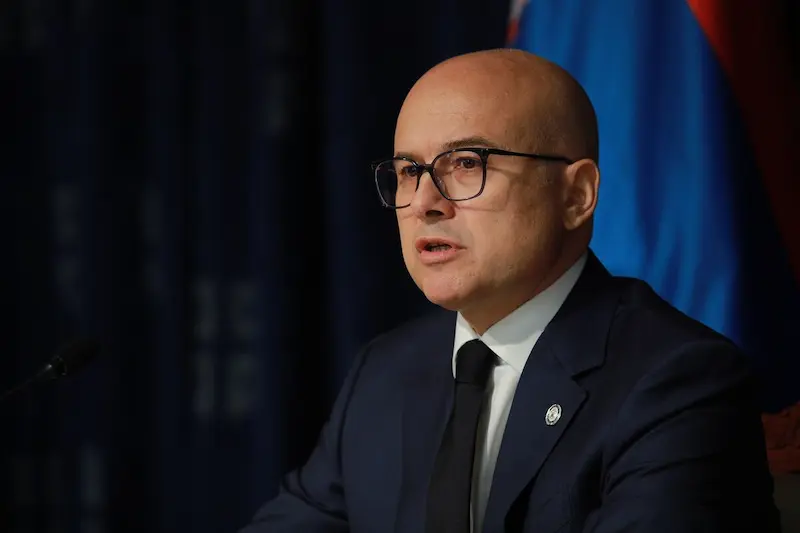


In a strategic move to solidify his authority following the recent general election, Serbian President Aleksandar Vucic has nominated his close ally and deputy prime minister, Milos Vucevic, to assume the role of the country's new government leader. Vucevic, 49, currently serving as the defense minister, is seen as a trusted confidant of Vucic and is expected to assemble a cabinet comprised of members from the ruling Progressive Party and its allied factions, ensuring a strong majority in the Serbian assembly.
The decision to appoint Vucevic comes after the snap election in December, which further entrenched the Progressive Party's control in Serbia. Despite facing allegations of electoral misconduct and unfair practices, Vucic's party maintained its dominance, with the exception of a municipal defeat in Belgrade, prompting the likelihood of a runoff election in June amidst ongoing protests in the capital city.
President Vucic expressed his confidence in Vucevic, citing his experience and successful track record in handling significant responsibilities as both deputy premier and defense minister. Vucevic's political career within the Progressive Party has been notable, having previously served as the mayor of Novi Sad, Serbia's third largest city, before entering Ana Brnabic's government. Last year, he assumed leadership of the party from Vucic himself, reflecting a sense of continuity and trust within the ruling party.
Vucevic's appointment signals Vucic's commitment to advancing Serbia's dual objectives of EU integration while maintaining strong partnerships with Russia and China. Noteworthy is Vucevic's involvement in key diplomatic engagements, such as accompanying Vucic on official visits, including a significant trip to China where discussions with top military officials took place. This underscores Serbia's complex geopolitical position and the delicate balance it seeks to maintain between its Western aspirations and historical ties to Russia and China.
Serbia's foreign policy stance, particularly concerning the unresolved issue of Kosovo's independence, has relied on support from China and Russia to counter international recognition of Kosovo. The disputed region declared independence in 2008, a move vehemently opposed by Belgrade. Vucevic's background and experience suggest a continuation of Serbia's diplomatic stance on Kosovo and other crucial regional matters, underlining the strategic importance of his nomination as the country's next prime minister.