


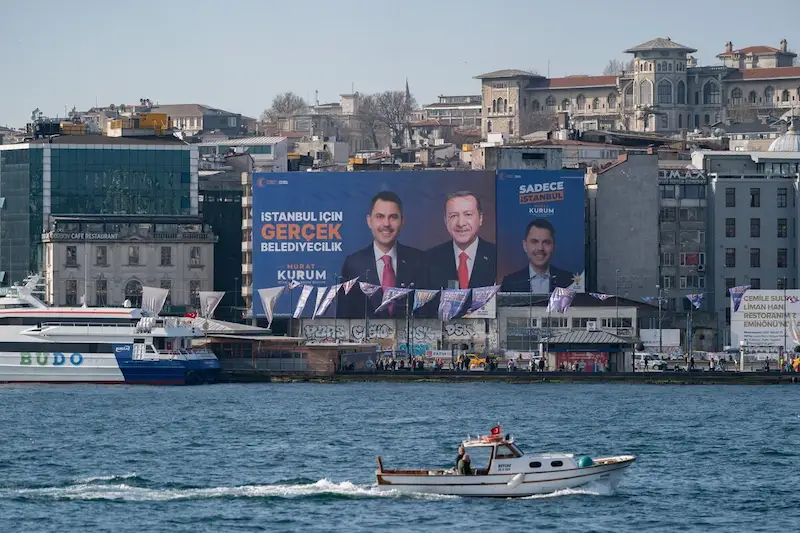


In a surprising turn of events, Turkish President Recep Tayyip Erdogan's ruling AK Party is poised to experience a significant setback in the country's municipal elections, early results indicate. According to data released by state broadcaster TRT, the AK Party is trailing behind the main opposition party, CHP, with support at 37.5% compared to CHP's 39%, based on nearly a third of all ballots counted. The opposition seems set to maintain control over key cities such as Istanbul and Ankara, dealing a blow to Erdogan's once-dominant political position.
The decline in support for Erdogan's party, especially in major urban centers, reflects a growing discontent among voters grappling with high inflation and diminished purchasing power. The government's measures to tackle inflation through steep interest rate hikes and wage stagnation have taken a toll on household budgets, influencing voters' choices at the ballot box. Istanbul-based polling firm Sonar's chief, Hakan Bayrakci, highlighted the economy as a pivotal factor shaping voters' decisions, signaling a clear message to Erdogan's party through these initial results.
All eyes are on the closely contested mayoral race in Istanbul, where incumbent Mayor Ekrem Imamoglu leads against Erdogan's chosen candidate by an eight-percentage-point margin, according to TRT. The outcome of this race holds particular significance, given Istanbul's status as Turkey's largest city with a substantial population and a critical budget. Imamoglu's victory in reclaiming Istanbul in 2019 marked a significant shift in the city's political landscape, ending Erdogan's longstanding control and underscoring the changing sentiments of voters.
The electoral landscape has been further complicated by the entry of the pro-Islamic New Welfare Party, which fielded its own candidates and secured around 4.5% of the votes in the initial count. The party's criticism of Erdogan's economic policies and stance on issues like trade with Israel has resonated with some voters, contributing to the fractured support for the ruling AKP. Additionally, incidents of violence in Kurdish-majority territories such as Diyarbakir and Mardin have marred election day, underscoring the complex political dynamics at play.
As the results continue to unfold, the implications of this electoral setback for the AK Party and Erdogan's leadership remain to be fully realized. The unexpected outcomes in major cities and the shifting political alliances underscore the evolving landscape of Turkish politics, with economic concerns and regional tensions playing a significant role in shaping voter behavior. Erdogan's response to these results and his government's policies in the aftermath of the elections will be closely watched, as Turkey navigates a period of political uncertainty and change.