


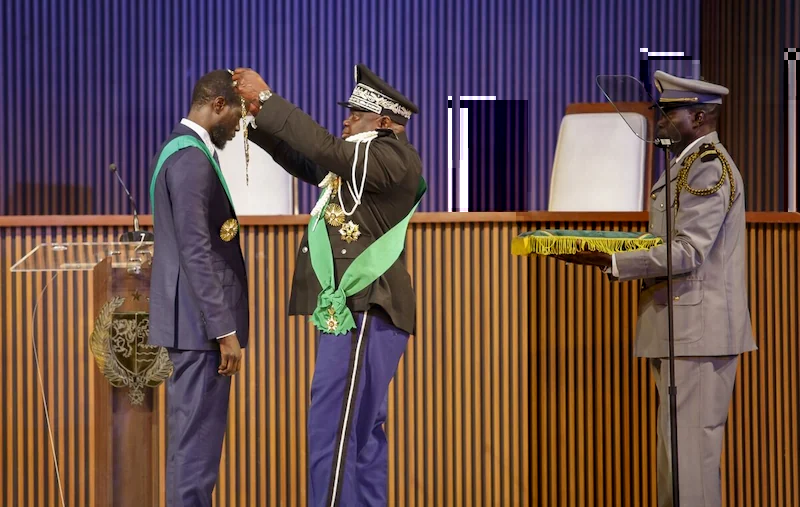


Bassirou Diomaye Faye, the 44-year-old opposition leader, has been sworn in as the President of Senegal, marking a historic moment as Africa's youngest elected leader. Faye's journey to the presidency was swift, as he was released from prison less than three weeks before the election in which he emerged victorious against the ruling party candidate, former Prime Minister Amadou Ba. The election, fueled by the frustration of Senegalese youth over unemployment and governance issues, reflects a deep desire for systemic change in the country.
In his inauguration speech in Dakar, Faye acknowledged the mandate for change bestowed upon him by the Senegalese people. He pledged to build a just and prosperous Senegal, one that prioritizes the well-being of its citizens. Faye, a former tax inspector who has never held public office before, rose to prominence with the endorsement of firebrand opposition leader Ousmane Sonko, who was jailed prior to the election.
Concerns among investors about Faye's victory center around potential policy changes that could impact the country's economic growth, which has averaged over 5% in the last decade under former President Macky Sall. Of particular interest are Faye's plans regarding oil and gas projects led by companies like BP Plc and Woodside Energy Group Ltd., slated to commence later this year and expected to fuel a rapid economic expansion.
Having spent time in prison on charges of contempt of court and spreading fake news, Faye faces the challenge of navigating a political landscape where Sall's party controls parliament. This could complicate the implementation of his campaign promises and necessitate alliances with other political factions, such as former President Abdoulaye Wade's Senegalese Democratic Party.
Faye's proposed reforms extend beyond domestic issues to regional integration and economic policy. He aims to reinvigorate the West African regional economic bloc by including junta-ruled Mali, Niger, and Burkina Faso, and has signaled a review of Senegal's fisheries agreements with the European Union. Moreover, Faye advocates for the reform of the West African franc, a currency with colonial origins that has drawn criticism for hindering regional development.
As he steps into office, Faye faces high expectations from a populace eager for change, especially from the youth demographic that mobilized in support of his candidacy. The new president's focus on utilizing national resources for the benefit of the Senegalese people, along with his emphasis on local economies and natural resource management, sets the stage for a transformative period in Senegal's political landscape.