


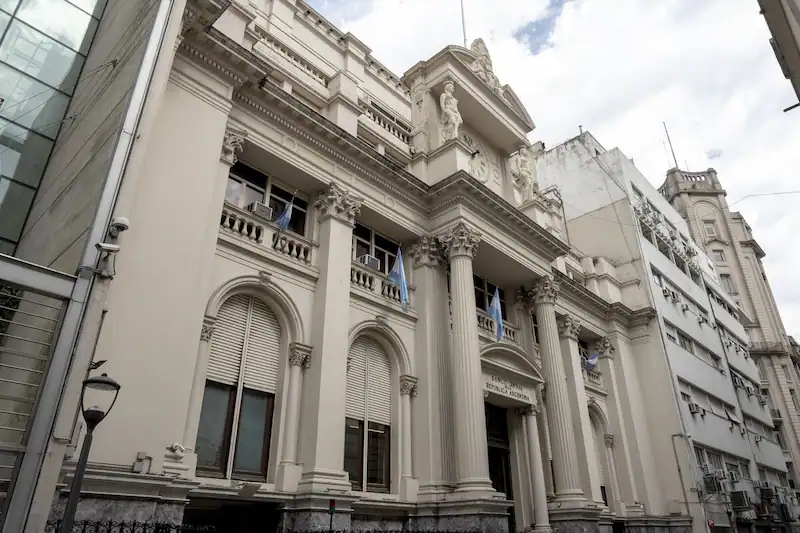


Argentina's central bank has once again made a bold move under President Javier Milei's leadership by cutting its main interest rate for the third time. The rate has been reduced from 80% to 70%, marking a significant drop from the 133% rate seen back in December. This decision comes as investors anticipate a potential slowdown in inflation in the country.
The latest interest rate cut signals the central bank's confidence in an upcoming moderation in inflation. Argentina is set to release its consumer price data on Friday, with expectations of a third consecutive slowdown in the month-on-month increase. By reducing borrowing costs, policymakers are aiming to alleviate cost-of-living pressures that have been exacerbated by the country's soaring annual inflation rate of 276%.
Despite the high inflation levels, the central bank's decision to lower interest rates may be seen as a necessary step to stimulate economic activity and promote financial stability. This move is in line with efforts to manage the issuance of money by the central bank and control its liabilities. Additionally, the central bank's decision to end its credit swap with the Bank for International Settlements and increase reserve requirements for money market mutual funds indicate a comprehensive approach to managing the country's monetary policy.
The International Monetary Fund (IMF) had previously recommended that Argentina maintain higher interest rates to align with inflation rates and support savings in the local currency. However, the central bank's decision to lower rates may be a response to the current economic conditions and the need to address inflationary pressures. While the IMF has emphasized the importance of tightening monetary policy to support money demand and disinflation, Argentina's central bank appears to be taking a different approach to address the country's economic challenges.
Overall, Argentina's central bank's decision to cut interest rates reflects a dynamic approach to monetary policy in response to the evolving economic landscape. As the country navigates high inflation and economic uncertainty, policymakers are seeking to strike a balance between stimulating economic growth and managing inflationary pressures. The coming months will be crucial in determining the effectiveness of these measures and their impact on Argentina's economic stability.