


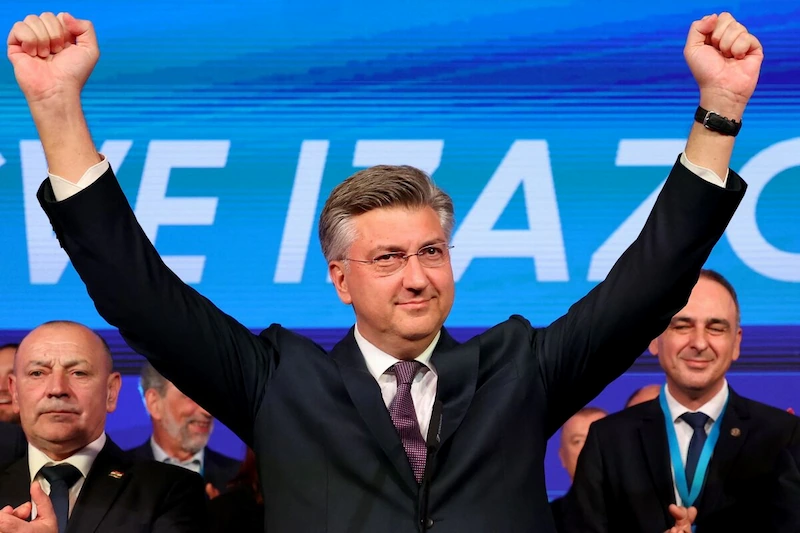


Croatian Prime Minister Andrej Plenkovic is navigating the challenging task of forming a new government following a setback in the recent parliamentary election. The opposition, backed by President Zoran Milanovic, is making a strong push to unseat the ruling party, creating a tense political environment in Croatia. Plenkovic, leader of the center-right Croatian Democratic Union (HDZ), claimed a convincing victory while the Social Democrats, aligned with Milanovic, are determined to remove him from power.
The outcome of this power struggle carries significant implications for Croatia's foreign policy stance. Under Plenkovic's leadership, the country has been a steadfast supporter of Ukraine, particularly within the European Union (EU). On the contrary, Milanovic has taken a critical stance against NATO's expansion following the conflict in Ukraine, signaling a potential shift in Croatia's geopolitical alignment. This contrast in foreign policy approaches could impact Croatia's relationships within the EU and on the global stage.
President Milanovic's unexpected bid for the premiership added an unexpected twist to the election. Despite facing legal challenges over his dual roles as president and candidate, Milanovic has remained resolute in his pursuit of the prime minister position. The political landscape in Croatia has been further complicated by Milanovic's controversial statements and confrontations with judicial authorities, raising questions about the stability of the country's democratic institutions.
As the election results unfolded, the HDZ secured 61 seats in the 151-member parliament, positioning them as the leading party but without an outright majority. Conversely, the Social Democrats garnered 42 seats, indicating a strong opposition presence. The fragmented parliamentary makeup necessitates coalition-building, with potential partnerships on both the right and left ends of the political spectrum being explored by the competing factions.
Amidst the post-election maneuvering, Prime Minister Plenkovic faces the challenge of securing a viable coalition to retain power. A potential alliance with the right-wing nationalist Homeland Movement, which secured 14 seats, could offer a pathway to a ruling majority but also carries risks of alienating centrist voters. On the other hand, President Milanovic's camp is exploring coalition options with centrist and left-leaning parties, such as the Bridge party and Mozemo, in their bid to unseat Plenkovic.
While the political landscape in Croatia remains uncertain, one thing is clear - the future direction of the country's governance and foreign policy hinges on the negotiations and alliances forged in the aftermath of the parliamentary election. Both Plenkovic and Milanovic face formidable challenges in navigating the complex web of interests and ideologies that shape Croatian politics, setting the stage for a period of intense political wrangling and strategic maneuvering in the days to come.