


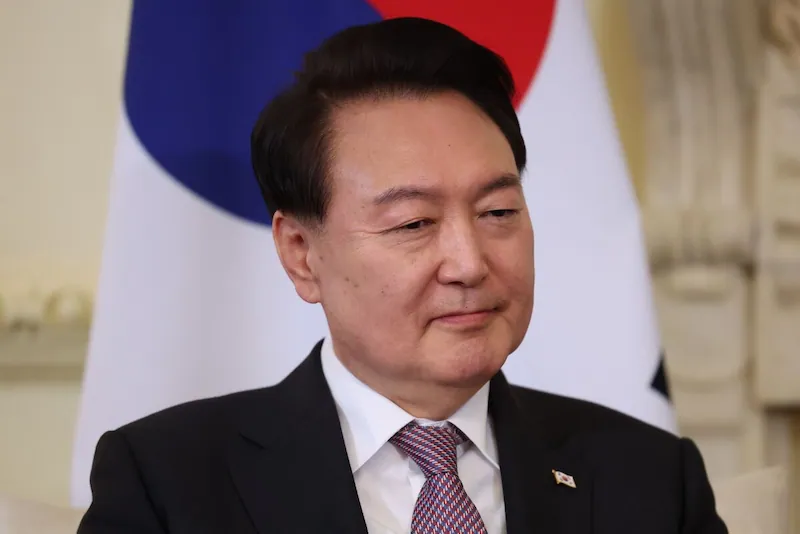


In a significant blow to South Korean President Yoon Suk Yeol, his approval rating has plummeted to the lowest point since taking office in 2022, following a resounding defeat in the recent election. According to a weekly tracking poll by Gallup Korea, Yoon's support now stands at a mere 23%, marking an 11-point drop from pre-election figures. This sharp decline, coupled with the loss of seats in the National Assembly, has left Yoon in a weakened position for the remainder of his term.
Criticism of Yoon's administration primarily revolves around his handling of the economy amidst soaring inflation and perceived deficiencies in communication skills. Dissatisfaction with these aspects was evident among respondents in the Gallup Korea survey, which sampled 1,000 individuals nationwide. The margin of error for the poll was noted to be plus or minus 3.1 percentage points.
Following the election setback, Yoon finds himself with limited legislative leverage, as his People Power Party bloc now holds only 108 seats in the 300-seat National Assembly. In contrast, the opposition Democratic Party bloc has significantly strengthened its position with 175 seats. Yoon's subsequent promises to listen to the populace and pivot in a new direction are yet to materialize into concrete government overhauls.
During the election, a stark contrast emerged between Yoon's pro-investor policies and the Democratic Party's advocacy for increased taxes on the affluent and powerful conglomerates, known as chaebols. The electorate predominantly favored the opposition's stance, with 47% expressing satisfaction with the election results, compared to 43% who voiced dissatisfaction, as per the Gallup survey analysis.
Economic concerns loomed large in the minds of voters leading up to the election, with issues such as inflation, housing affordability, and economic stability taking center stage. The ongoing depreciation of the won, coupled with stubbornly high inflation rates exceeding the Bank of Korea's 2% target, further exacerbated the economic unease among the populace.
Meanwhile, a protracted standoff with trainee doctors protesting against the government's plans to expand medical school enrollments added a layer of complexity to the electoral landscape. The latest Gallup survey underscores a general yearning among respondents for a compromise to end the labor dispute, which has strained the healthcare system since February.
In a notable development, the government has recently accepted a proposal from medical schools to adjust the number of seats for the 2025 school year within a revised range, potentially easing tensions and resolving the prolonged deadlock. This move signifies a step towards alleviating the healthcare crisis sparked by the doctors' strike and signals a willingness to address key issues affecting the nation's well-being.