


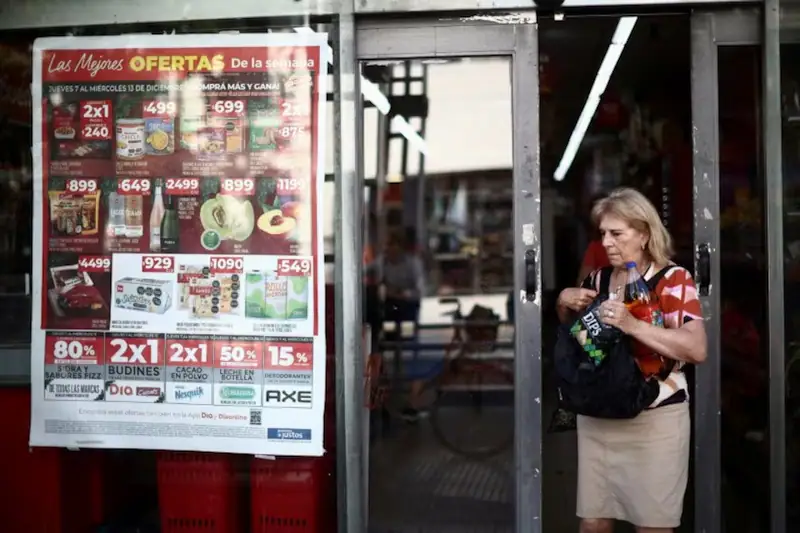


In February, Argentina's economic activity is anticipated to have plummeted by 5.9% compared to the previous year, marking the fourth consecutive monthly decline. This downturn is a direct result of the stringent austerity measures implemented by the new libertarian President, Javier Milei. Despite aiming to bolster the government's fiscal position and replenish the central bank reserves, these measures have exerted a significant strain on the real economy, as reflected in the predicted sharp drop in economic activity.
The survey conducted in mid-April by 11 analysts revealed projections ranging from a 4.1% to a 7.1% year-on-year decrease for February. Although sectors like agriculture and mining have shown resilience with favorable growth rates, there has been a notable contraction in consumption, manufacturing, and construction. Orlando Ferreres & Asociados, a consulting firm, highlighted this disparity, emphasizing the contrasting performance across various industries within the Argentine economy.
Milei's austerity agenda includes a drastic reduction in government size, the curtailment of fuel and transport subsidies, closure of state entities, and an overhaul of welfare programs. These measures have been pivotal in addressing the deep-seated economic challenges that Argentina faces, particularly in stabilizing the state's finances amidst persistent deficits and dwindling reserves. Nevertheless, the consequential impact on private consumption, coupled with a decrease in state expenditure, is expected to impede economic activity in the upcoming months.
The consecutive declines in economic activity recorded in December, January, and now February underscore the severity of the economic crisis gripping Argentina. As per the forthcoming official data release, the anticipated downturn in February is indicative of the overarching economic challenges plaguing the nation. Despite the grim outlook, there are glimmers of hope on the horizon, as noted by Eugenio Marí, Chief Economist of the Libertad y Progreso Foundation.
Marí's optimism is based on the gradual deceleration of inflation rates, which have been soaring close to 300% annually. He projects that the bottoming out of economic activity will likely occur in March, paving the way for a gradual recovery starting in April. This revival is expected to be spearheaded by certain economic sectors, particularly exporters, and could also signal a resurgence in the purchasing power of salaries and pensions as inflation eases. In essence, while the current economic landscape remains challenging, there are nascent signs of a prospective turnaround in the near future for Argentina.