


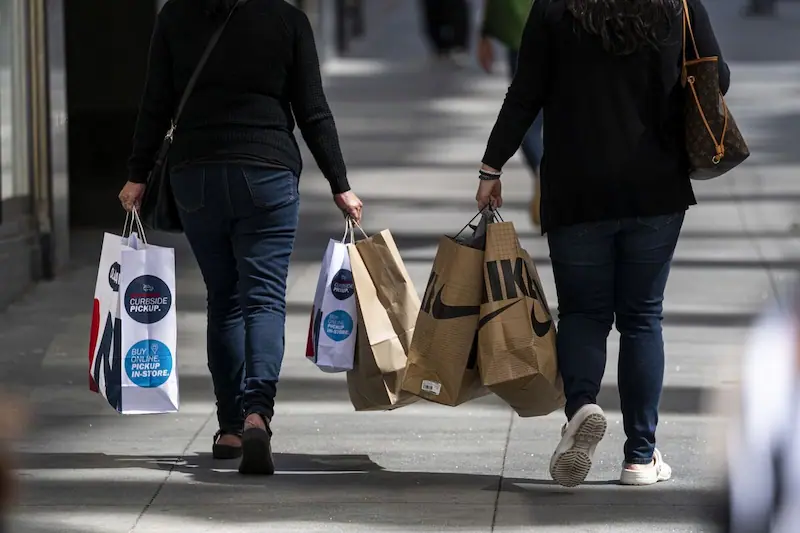


In April, American consumer sentiment took a hit as inflation expectations rose, causing concerns about personal finances and the overall economy. The University of Michigan's final April index dipped to 77.2 from 79.4 in March, indicating a growing unease among consumers. This drop came amidst expectations for the gauge to remain stable at its preliminary reading of 77.9, as predicted by economists in a Bloomberg survey.
Notably, consumers now anticipate prices to increase at a 3.2% annual rate over the next year, the highest level since November and up from the 2.9% expected in March. Looking further ahead, the expectation for cost increases over the next five to ten years stands at 3%, marking a significant five-month high. These figures underscore the impact of persistent price pressures and higher borrowing costs on consumers' confidence.
While consumers are feeling the pinch of escalating prices in their daily expenses, their concerns about larger purchases such as durable goods, vehicles, and homes remained relatively steady compared to last month. However, 38% of consumers admitted that high prices were indeed affecting their living standards, a notable increase from the 33% reporting the same last month.
The drop in consumers' perceptions of their current financial situation and the economic outlook for the next year to four-month lows paints a concerning picture. The current conditions gauge fell to 79 from 82.5, while the expectations measure declined to 76 from 77.4, indicating a growing sense of uncertainty among consumers.
These sentiment gauges play a crucial role in understanding voters' sentiments regarding the economy and personal finances in the lead-up to the upcoming presidential election in November. The recent Bloomberg News/Morning Consult poll revealed that President Joe Biden's polling numbers in key battleground states have dwindled, largely due to increasing economic pessimism among voters.
As the University of Michigan transitions to online surveying from telephone calls, the data for March was a combination of over 600 phone interviews and nearly 200 web interviews. This shift in data collection methods highlights the evolving landscape of consumer sentiment analysis and economic forecasting in today's digital age.