


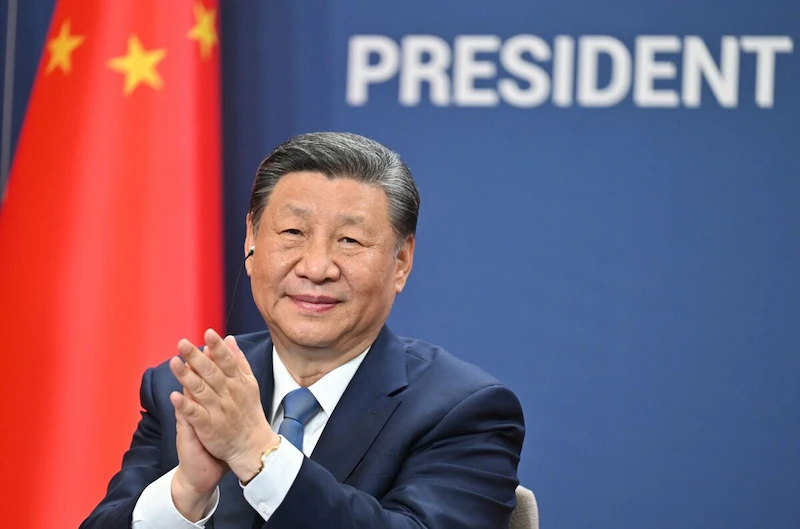


President Xi Jinping's visit to eastern Europe has reinforced China's ties with the region while the European Union adopts a more stringent stance on trade issues with Beijing. Xi's arrival in Hungary marks the final leg of his European tour, following visits to France and Serbia. The Chinese president is set to sign numerous agreements in Budapest, covering key infrastructure projects in rail, road, and energy sectors, further solidifying China's economic presence in the region.
In an op-ed published in the Hungarian ruling party's newspaper, Magyar Nemzet, Xi emphasized the significance of the strengthened relations with eastern Europe, framing it as a positive development for global stability and development. He highlighted the complementary nature of the partnership, describing it as a valuable addition to China-Europe relations amid growing tensions between Beijing and Western European nations over trade practices.
Hungary, under the leadership of Prime Minister Viktor Orban, has strategically positioned itself as a key economic partner for China within the European Union. With significant Chinese investments, particularly in the electronic vehicle industry, Hungary has become a focal point for Chinese companies seeking a foothold in Europe. Projects such as BYD Co.'s European car factory and Contemporary Amperex Technology Co. Ltd.'s battery plant in Debrecen demonstrate the deepening economic cooperation between the two nations.
Orban's administration has prioritized fostering strong ties with China, despite pressure from the US and the EU to reevaluate these relationships in light of concerns over human rights and trade imbalances. Balazs Orban, the chief political adviser to the Hungarian prime minister, reiterated the country's commitment to enhancing competitiveness through cooperation with China, emphasizing the mutual benefits of maintaining robust bilateral relations.
During his visit to Serbia, Xi further solidified economic and political partnerships, signing agreements to enhance the strategic partnership between China and Serbia. The two countries pledged to increase trade and investment, with Serbia anticipating substantial infrastructure projects supported by Chinese investment. Additionally, both nations reaffirmed their support for each other's territorial integrity, with Serbia endorsing China's stance on Taiwan in return for Beijing's support regarding Kosovo.
Xi's European tour comes amidst heightened scrutiny from the EU, as the bloc ramps up investigations into China's economic activities. While in France, the Chinese president engaged in discussions with President Emmanuel Macron, who echoed the EU's growing concerns regarding China's market practices. The EU, represented by European Commission President Ursula von der Leyen, expressed readiness to defend its economies against unfair trade practices, particularly in sectors such as electric vehicles and steel.
In summary, President Xi Jinping's diplomatic engagements in eastern Europe underscore China's growing economic influence in the region, even as the EU adopts a more assertive approach towards balancing trade relations with Beijing. The partnerships forged during Xi's visit, particularly with Hungary and Serbia, highlight the evolving dynamics of global trade and the complex interplay between economic cooperation and geopolitical considerations.