


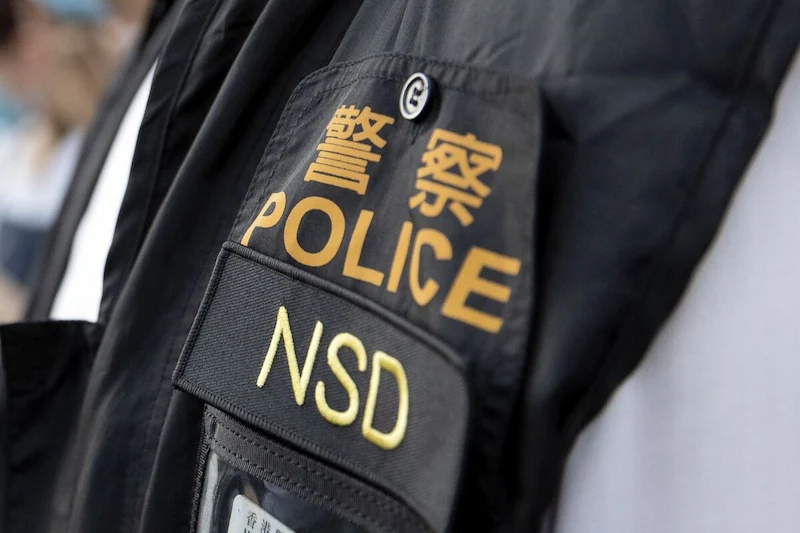


Hong Kong's national security forces have made six arrests using their newly introduced security law, occurring just days before the 35th remembrance of the infamous Tiananmen Square incident. Police stated that they have a female detainee in their custody, who allegedly engaged in seditious activities online, aided by five others. This information was disclosed in an official statement on Tuesday. The social media posts allegedly encouraged people to participate in illegal activities centered around a "sensitive date," though the authorities did not specify which date.
The arrested individuals are believed to have violated the newly enacted Safeguarding National Security Ordinance, and face a potential seven-year jail term if convicted. The law was implemented hastily about two months ago, which sparked international apprehension that it could stifle freedom of speech in the city.
Hong Kong's Security Chief, Chris Tang, identified the detained woman as Chow Hang-tung, the prior vice-chair of a Hong Kong activist organization known for arranging an annual memorial event to honor the victims of Beijing's violent clampdown on pro-democracy demonstrators in 1989. Chow was already in custody on a different charge when she was taken into custody at Tai Lam Centre for Women, a maximum security facility.
Tang asserted, during a press briefing, that the suspects "incited hatred and mistrust against the central government, the Hong Kong government, and the judiciary." He added, "We are duty-bound to take determined measures to secure the safety of Hong Kong and our country."
Chow's organization, the Hong Kong Alliance in Support of Patriotic Democratic Movements of China, was disbanded in 2021 due to the pressure of a national security law enforced by Beijing the previous year.
Hong Kong, a significant financial hub in Asia, executed its domestic security legislation in March to further safeguard the Chinese state. The broadly defined offenses concerning state secrets in the new legislation brings Hong Kong in line with China’s vaguely worded espionage law, which has made foreign investors uneasy over the past year. The law also introduces major crimes like treason and revolt, which are punishable by lifetime imprisonment, bolstering law enforcement's power to suppress political dissent. This has strained the city's relationship with several Western democracies.