


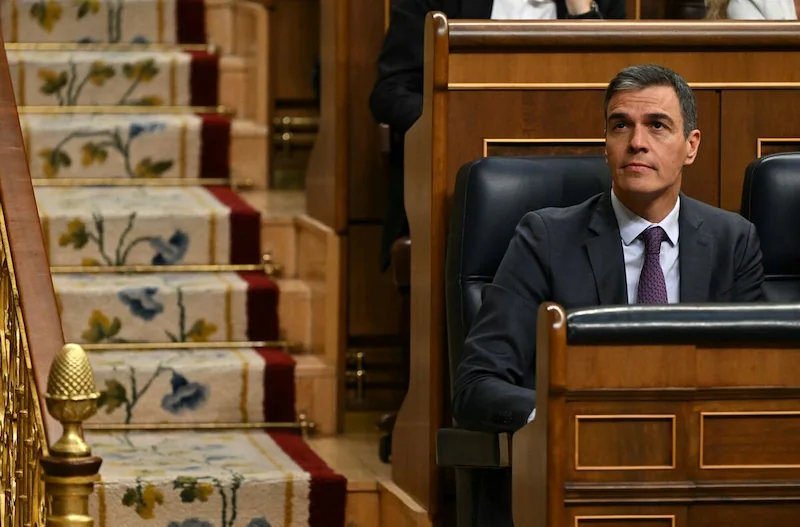


In a significant development, the Spanish parliament has given the green light to a contentious amnesty law that will effectively shield Catalan separatist leaders and their supporters from criminal charges. Prime Minister Pedro Sanchez, of the Socialist party, sees this as a strategic move to breathe new life into his struggling coalition government after months of legislative gridlock.
Sanchez's decision to push through the amnesty law is seen as a bid to secure the backing of Catalan parties, who have made this legislation a crucial condition for their support. This maneuver has enabled Sanchez to maintain his grip on power, despite his party's defeat in the elections last year, by cobbling together a fragile majority with various left-wing and separatist factions.
However, the move has not been without its critics. Members of Sanchez's own party and the conservative opposition have vehemently opposed the law, labeling it as a blow to democracy in Spain. Opposition leader Alberto Nunez Feijoo expressed his disapproval, highlighting the contentious nature of the decision.
The approval of the law paves the way for former Catalan President Carles Puigdemont to return to Spain without the risk of immediate arrest. Puigdemont, who fled the country in 2017 following his involvement in organizing an illegal independence referendum, remains a polarizing figure and his potential return may reignite tensions in the region.
As the political landscape in Spain navigates this latest development, the government is hopeful that once the dust settles post-EU elections, focus can shift towards advancing policy agendas. The repercussions of the amnesty law remain to be seen, with the potential for both reconciliation and further discord on the horizon.