


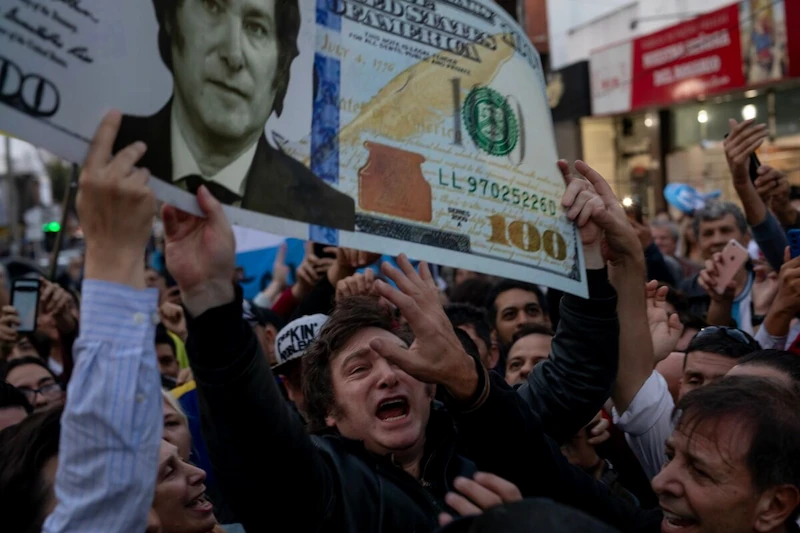


Amid President Javier Milei's implementation of shock-therapy economic policies in Argentina, a surprising shift in currency demand has emerged. Previously known for wielding US hundred-dollar bills with his face on them during the election campaign, Milei's focus on loosening price controls while maintaining a tight grip on the peso has led to a sudden resurgence in the need for pesos among Argentines.
Recent data from the central bank reveals a notable trend reversal, indicating that more Argentines are now selling their dollar savings for pesos to cope with the escalating cost of living. In contrast, the number of individuals purchasing foreign currency has decreased significantly. This shift marks a stark departure from the pre-Milei era, where the majority of citizens were stocking up on dollars to safeguard their savings.
Milei's decision to abandon price controls has propelled inflation to soaring heights, eroding the purchasing power of the peso. Despite a depreciation of the currency, it has not kept pace with the rapid increase in prices, rendering essential goods prohibitively expensive for many in dollar terms. Consequently, Argentines are resorting to tapping into their dollar reserves to cover everyday expenses.
While Milei's administration maintains that the peso is not overvalued, they do not intend to accelerate its devaluation to align with inflation rates. Rather, they advocate for businesses to lower prices to address the disparity. Moreover, the president envisions a future where the US dollar and peso coexist as legal tender, fostering a "competition of currencies" framework. Additionally, he remains steadfast in his commitment to shutting down the central bank entirely.
Overall, Milei's unconventional economic strategies have sparked a currency shift in Argentina, prompting a resurgence in the demand for pesos and altering the financial landscape for its citizens.