


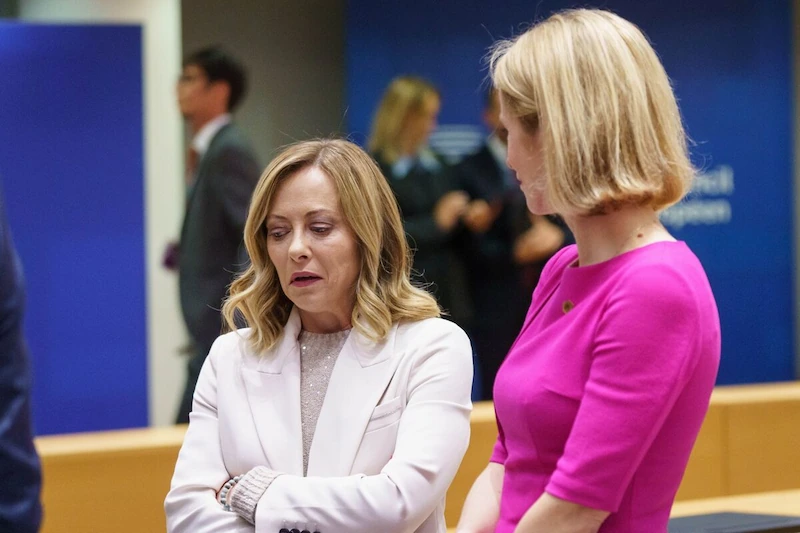


In the aftermath of the European elections, a significant surge by Giorgia Meloni’s right-wing political group has ignited a sense of urgency among centrist parties to expedite discussions regarding the allocation of key positions within the European Union institutions. The impending agreement, set to be finalized at an upcoming summit, would see Ursula von der Leyen retaining her position as European Commission president, Antonio Costa assuming leadership of the European Council, and Kaja Kallas stepping into the role of the bloc’s chief diplomat.
The urgency stems from the projected rise of the anti-immigrant European Conservatives and Reformists, spearheaded by Italian Prime Minister Giorgia Meloni, potentially claiming the position as the third-largest group in parliament. This shift threatens to relegate the Liberals — aligned with the dominant center-right party and the Socialists — to fourth place, granting Meloni increased leverage in securing influential committees or portfolios within the commission.
Greek Prime Minister Kyriakos Mitsotakis has indicated that sufficient votes are secured for the election of von der Leyen without the need for political agreements with parties further to the right. Despite initial discord among EU leaders during a recent dinner meeting, a tentative consensus on the top institutional positions has been reached, albeit subject to potential modifications.
Meloni has voiced criticism regarding the appointment process, asserting her group's right to claim a significant role following their electoral success. In her quest to elevate Italy's standing within the EU, Meloni seeks to exert influence in discussions surrounding the allocation of key commission portfolios, particularly those pertaining to initiatives such as the green deal predominantly associated with the Socialists.
While certain unresolved discussions persist regarding the duration of presidencies within the parliament and council, as well as the allocation of pivotal commission roles, Meloni’s newfound leverage as a prominent political force necessitates a recalibration of power dynamics and a reevaluation of traditional alliances in the European political landscape.