


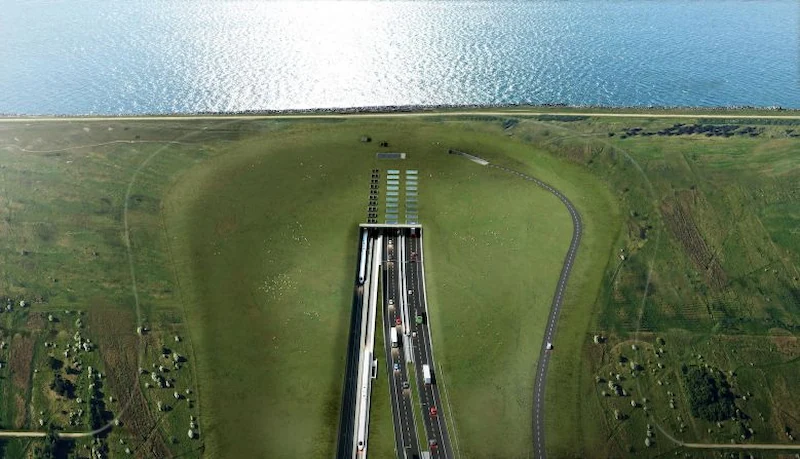


Beneath the Baltic Sea lies a transformative engineering feat in the making, as the Fehmarnbelt Tunnel gears up to connect Denmark and Germany like never before. Spanning a staggering 18 kilometers, this cutting-edge submerged tunnel project marks a significant milestone since its commencement in 2020. With the recent inauguration of the first tunnel element by King Frederik X of Denmark, the tunnel is well on the way to reshape cross-border travel as we know it.
At the heart of this endeavor is the state-of-the-art production facility on the Danish side, where 89 colossal concrete sections are being meticulously crafted to form the tunnel. With a construction budget exceeding 7 billion euros, the Fehmarnbelt Tunnel ranks among Europe's most ambitious infrastructure ventures. Comparatively, the Channel Tunnel, completed in 1993, cost a significant sum, highlighting the magnitude and complexity of the Fehmarnbelt project.
Travelers between Denmark and Germany can soon bid adieu to lengthy ferry journeys, as the Fehmarnbelt Tunnel aims to slash transit times to a mere seven minutes by train and 10 minutes by car. Not only will it be the world's longest combined road and rail tunnel, but it promises to revolutionize travel between Copenhagen and Hamburg, reducing a four-and-a-half-hour journey to a mere two and a half hours.
The positive repercussions of the tunnel's completion extend beyond mere convenience. Freight transport stands to benefit significantly, with a shortened route between Sweden and Central Europe, trimming distances by a substantial 160 kilometers. This groundbreaking project not only enhances connectivity but also bolsters sustainable transport options, steering towards a greener future for both passengers and cargo alike.
As construction progresses, the project's economic impact comes to the fore. With up to 2,500 individuals directly involved in the construction, the Fehmarnbelt Tunnel is not just a feat of engineering but an engine for growth and job creation. Visionaries view the tunnel as a strategic corridor linking Scandinavia and Central Europe, fostering economic growth and paving the way for a more interconnected business landscape.
Despite some environmental concerns, proponents of the Fehmarnbelt Tunnel see it as a boon for nature and climate conservation. By creating new natural habitats and promoting sustainable transport alternatives, the tunnel demonstrates a commitment to environmental stewardship. As trains emerge as formidable competitors to air travel, the tunnel stands as a beacon of progress towards a more sustainable future for transport and the environment alike.