


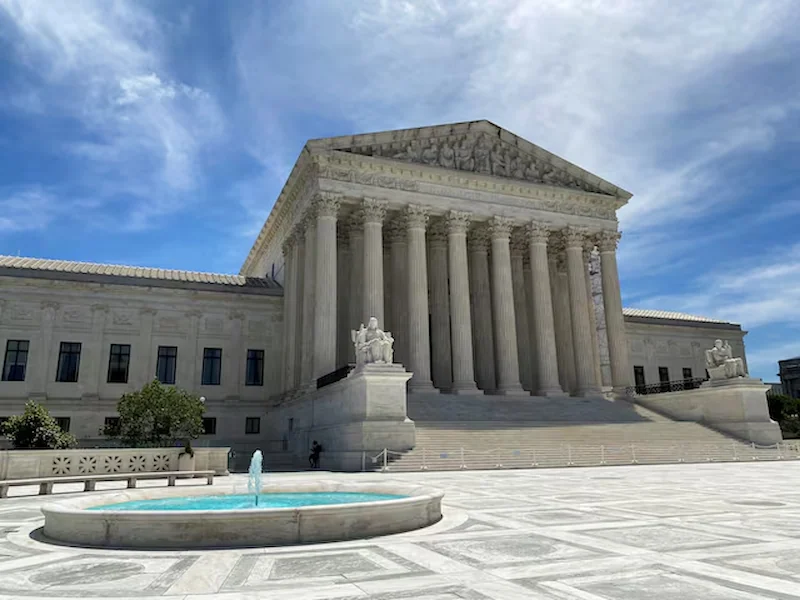


In a resounding rebuke to the 5th U.S. Circuit Court of Appeals, the U.S. Supreme Court has decisively overturned five high-profile cases spanning contentious political realms such as abortion rights, online free speech, federal student loans, immigration, and Native American child welfare. The Supreme Court's message was clear: the cases should never have been allowed due to insufficient legal standing, a fundamental requirement for plaintiffs to proceed with their claims.
Legal standing, a foundational principle in the judiciary, demands that plaintiffs demonstrate a concrete and traceable injury caused by the defendant that can be remedied by the court. By nullifying rulings from the conservative-leaning 5th Circuit, renowned for its stances in Republican-led states like Texas, Louisiana, and Mississippi, the Supreme Court aims to curb the influx of politically charged lawsuits originating from this circuit.
Constitutional law scholar Stephen Griffin points out the clear attempt by the Supreme Court to rein in the 5th Circuit's leniency in granting standing in borderline cases. The Court's conservative majority, while pushing American law rightward on various fronts, seems to affirm its commitment to upholding strict standing requirements, even to the potential dismay of conservative plaintiffs and states.
Notably, the recent Supreme Court decisions have rejected 5th Circuit rulings on key matters involving challenges to Biden administration policies and federal laws. Major cases like disputes over immigration enforcement, student loan debt cancellation, abortion pill access, and tech censorship demonstrate the Court's unwavering stance on standing, regardless of the political valence of the issues at hand.
The shift in litigation dynamics is evident as the Court addresses the rising trend of state attorneys general frequently suing over opposing-party presidential policies. By reevaluating the permissibility of state suits and asserting a narrower view of standing, the Court aims to prevent policy disputes from clogging the judicial system.
While some dissent has arisen over potential consequences for marginalized groups being dissuaded from seeking legal recourse, the overarching impact of these rulings is to halt the manipulation of the legal system for political gain. The Supreme Court's firm stance on standing in the face of the 5th Circuit's indulgence of questionable cases marks a significant step in ensuring the integrity and efficacy of the U.S. judiciary.