


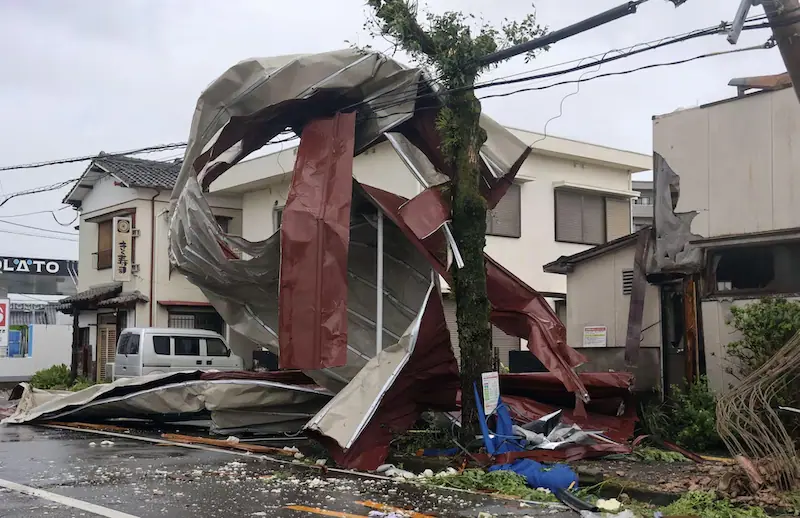


In a devastating onslaught, Typhoon Shanshan unleashed its fury upon southwest Japan, prompting the evacuation of millions of residents as it tore through the region with relentless force. With howling winds and relentless rain, the powerful storm wreaked havoc, claiming at least three lives and causing widespread damage.
The impact of Typhoon Shanshan was felt across various sectors, with major factories, including Toyota, Nissan, and Honda, forced to halt operations to ensure employee safety. The semiconductor industry also took a hit, as companies like Renesas, Tokyo Electron, and Rohm suspended production in the face of the storm's ferocity.
For those on the ground, the experience was nothing short of terrifying. In Miyazaki city, a funeral parlour employee, Tomoki Maeda, found himself amidst the chaos as the typhoon struck, shattering windows and bringing down power lines in its path. The sheer power of the storm, with gusts exceeding 180 km per hour, left a trail of destruction in its wake, toppling even moving trucks in its path.
As the storm progressed, leaving more than 200,000 households without power in its wake, authorities issued evacuation notices to over 5.2 million people across the country. In Kyushu, where the storm first made landfall, residents grappled with the aftermath of the devastation, with heavy rain triggering landslides and adding to the chaos.
The resilience of the Japanese people was on full display as communities banded together to support those affected by the storm. In Hitoyoshi, a hotel owner, Madoka Kubo, opened her doors to elderly evacuees, offering refuge to those displaced by the disaster.
As transportation services ground to a halt, airlines and train companies scrambled to manage the disruption, canceling hundreds of flights and suspending train services in affected areas. With the storm set to move towards central and eastern regions, including Tokyo, in the coming days, the country remained on high alert, bracing for further impact.
Typhoon Shanshan stood as a stark reminder of the unpredictable and destructive power of nature, underscoring the importance of preparedness and resilience in the face of such catastrophic events. As Japan grappled with the aftermath of the storm, unity and solidarity emerged as the guiding principles in navigating through the chaos left in its path.