


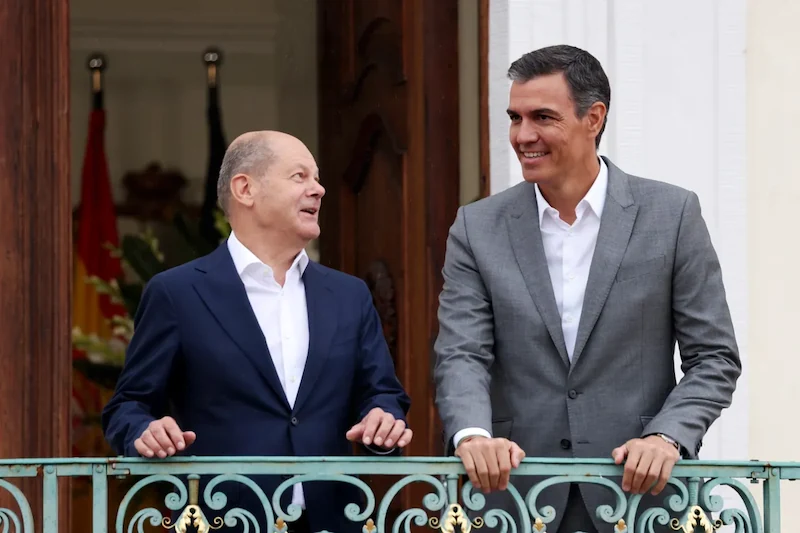


Amidst tensions within the European Union regarding the imposition of additional tariffs on Chinese-made electric vehicles, German Chancellor Olaf Scholz and Spanish Prime Minister Pedro Sanchez have made a significant move by urging the EU to rethink its strategy. The proposed tariffs, amounting to nearly 50%, have sparked a wave of diplomatic visits between EU leaders and Chinese President Xi Jinping, with Sanchez becoming the first to vocally oppose the impending trade measures.
The EU is set to make a final decision on the tariffs next month, with the requirement of approval from 15 member states representing 65% of the EU's population to proceed. Sanchez's bold stance in calling for a reassessment of the tariffs has sent ripples through European capitals, potentially influencing the ongoing negotiations with China on this matter.
Former European Central Bank President Mario Draghi has highlighted the threat posed by China's state-sponsored competition to EU industries, emphasizing the need for a robust strategy to enhance competitiveness. The diverging opinions within the EU highlight the challenge of balancing economic interests with geopolitical dynamics, especially in the face of China's strategic maneuvers aimed at exploiting divisions among Western allies.
Sanchez's unexpected move to challenge the EU's position underscores the complexities at play, considering his typically aligned stance with EU policies. With economic stakes high for countries like Germany and Spain, who are key players in the automotive industry, the pressure to find a common ground with China while upholding the EU's principles is palpable.
As the EU gears up for crucial votes on the tariffs, the outcome of these deliberations will not only shape the future of EU-China trade relations but also test the unity and resilience of the bloc in the face of external pressures. The ongoing discussions between Chinese and EU officials aim to find a middle ground that complies with international trade regulations, presenting a critical juncture for both sides to navigate. Amidst these intricacies, the diplomatic dance between EU leaders, China, and the broader international community continues, underscoring the delicate balance of interests at play.