


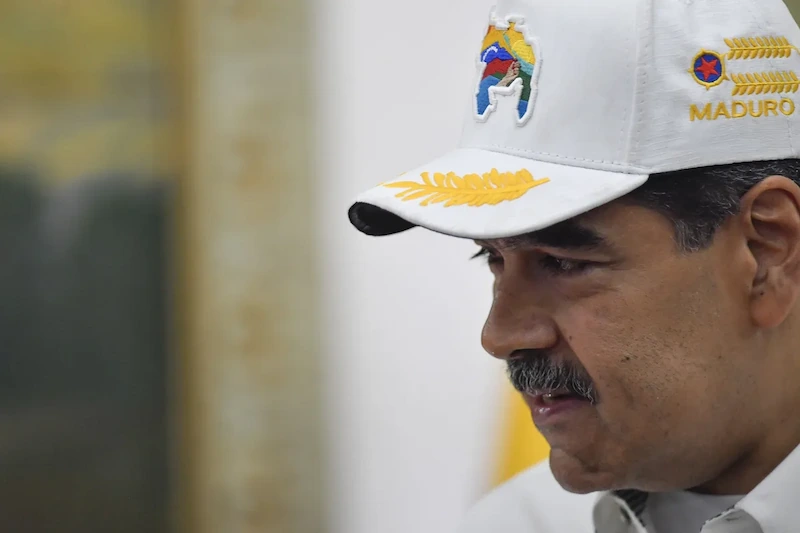


In a shocking turn of events, Venezuelan officials have apprehended three Americans, two Spaniards, and a Czech citizen on accusations of being part of a clandestine mission to eliminate President Nicolas Maduro. The arrests were made public by Diosdado Cabello, Venezuela's influential interior minister, who asserted that the foreign nationals were involved in a CIA-led conspiracy to overthrow the Venezuelan government and perpetrate targeted assassinations within its leadership.
During a televised address, Cabello showcased seized rifles purportedly belonging to the alleged conspirators. Among the detained American individuals was Wilbert Joseph Castañeda Gomez, a former Navy seal with deployments in conflict zones like Afghanistan, Iraq, and Colombia. Despite repeated requests for comment, Spain's embassy in Venezuela remained silent regarding the apprehension of its citizens.
Notably, the U.S. State Department acknowledged the detention of a U.S. military member and expressed awareness of additional reports detailing the capture of two more American citizens in Venezuela. The Department swiftly refuted any claims of U.S. involvement in subversive activities against Maduro, underscoring its support for a democratic resolution to Venezuela's political unrest.
These arrests unfold following the recent imposition of sanctions by the U.S. Treasury on sixteen Maduro allies allegedly implicated in electoral misconduct and human rights violations during Venezuela's controversial July 28 presidential election. Amid escalating tensions, Spain's parliament recognized opposition figure Edmundo Gonzalez as the rightful victor of the election, eliciting ire from Maduro loyalists who demanded a rupture in relations with Spain.
The aftermath of the election saw widespread protests within Venezuela and a heated dispute over the legitimacy of the results. While the Electoral Council affirmed Maduro's victory with 52% of the vote, opposition activists, armed with evidence from 80% of the nation's voting machines, claimed Gonzalez triumphed decisively. Despite international outcry over the lack of transparency in the electoral process, Venezuela's supreme court upheld Maduro's win, prompting Gonzalez to seek refuge in Spain to evade imminent arrest.
Maduro, steadfast in his position, has dismissed calls for transparency and continues to fend off allegations of electoral fraud. With longstanding suspicions of U.S. intervention, Maduro has accused Washington of employing sanctions and covert schemes to destabilize his regime. Notably, the Maduro administration has leveraged the detainment of Americans in the past as bargaining chips in diplomatic negotiations, as evidenced by the release of prisoners in exchange for concessions, including a high-profile deal involving Alex Saab, a key Maduro ally entangled in money laundering charges.
As the geopolitical landscape surrounding Venezuela grows increasingly contentious, the recent arrests underscore heightened tensions and the complex power dynamics at play in the region. The unfolding saga of international intrigue and political brinkmanship casts a shadow of uncertainty over Venezuela's future and its fraught relationship with the global community.