


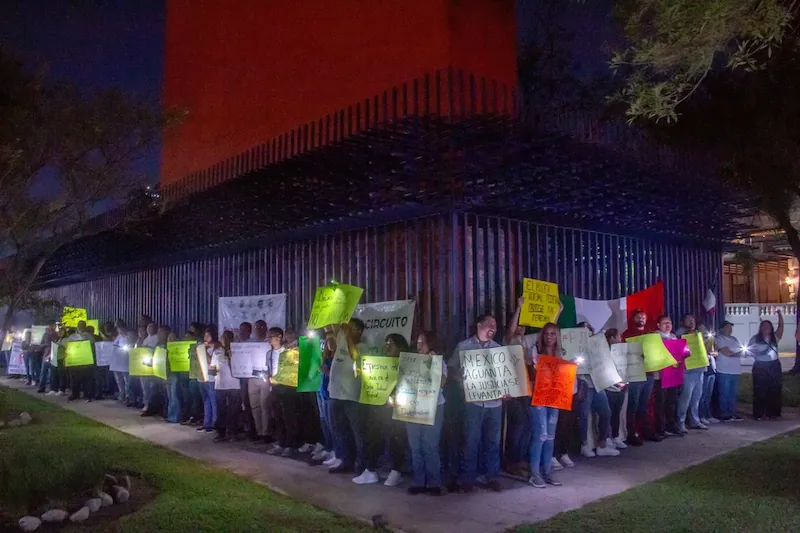


In a significant move, Mexico's Lower House has passed a constitutional amendment designed to protect recent changes to the judiciary from being challenged or suspended by the courts. The amendment, which was supported by a comfortable majority, aims to safeguard the government's judicial reforms that include the election of all federal judges by popular vote, a proposal initially put forth by former president Andres Manuel Lopez Obrador.
This decision comes just days before the Supreme Court was set to review a draft ruling on the controversial overhaul. Justice Juan Luis Gonzalez Alcantara Carranca had proposed to uphold certain aspects of the reform while striking down others, citing constitutional concerns. However, with the Lower House's approval of the amendment, the Court's discussion of these potential challenges could now be impacted.
While supporters of the reform argue that it will help combat corruption within the judiciary, critics, including investors, opposition lawmakers, and international allies like the US, have voiced fears over the erosion of checks and balances in Mexico's democracy. Despite legal challenges and opposition from various quarters, President Claudia Sheinbaum and her coalition have remained steadfast in pushing through the reform agenda.
In addition to the judicial overhaul, the current government has also passed other controversial constitutional reforms, such as the energy reform giving state companies priority in the energy sector, raising further concerns among stakeholders. With more reforms on the horizon, including one that potentially threatens the autonomy of regulatory bodies, the political landscape in Mexico remains highly charged.
Notably, the recent developments have led to a standstill within the Supreme Court, with reports indicating that a significant number of justices have expressed their intention to resign before the next judicial election in 2025. This move could further complicate the already tumultuous situation surrounding the judiciary and its future direction in Mexico.