


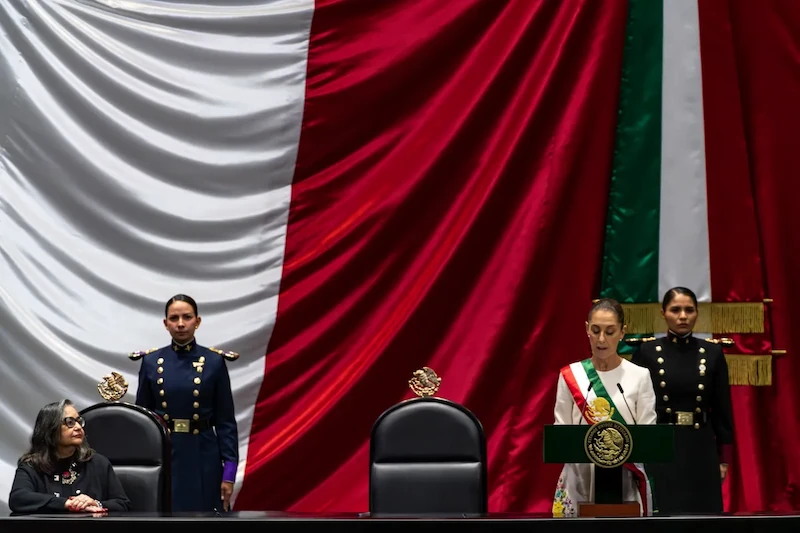


Mexico finds itself on the brink of a constitutional crisis as the Supreme Court gears up for a pivotal review of the contentious judicial reform pushed forward by the ruling Morena party. The upcoming decision, scheduled for Tuesday, stands to deepen the rift between the justices and Morena, possibly pushing the nation towards an institutional breaking point.
Justice Juan Luis Gonzalez Alcantara's draft ruling on the legality of popular elections for Supreme Court members refutes some aspects of the judicial reform, particularly denouncing the rapid election process of federal judges. This stance has set the stage for a showdown between the court and Morena, with the majority of justices, including Gonzalez Alcantara, indicating their willingness to step down rather than participate in the elections.
The controversial reform efforts have already sent ripples through Mexico's political landscape, alarming investors and international allies. The fear that Morena seeks to consolidate power and weaken democratic checks looms large as the party tightens its grip on the judiciary.
Morena's latest move to limit the Supreme Court's powers through a new law has only added fuel to the fire, signaling a direct challenge to the court's authority. Despite the potential clash between branches of government, President Claudia Sheinbaum, handpicked by former President Lopez Obrador, appears steadfast in her commitment to proceed with the elections regardless of the court's ruling.
The tug-of-war between the branches of government highlights a fundamental question of power and democracy in Mexico. While Morena defends the reform as a necessary step to combat judicial corruption, critics argue that it undermines the constitutional separation of powers and threatens the independence of the judiciary.
Amid escalating tensions, Justice Lenia Batres, an appointee of Lopez Obrador, offers a contrasting view, emphasizing the limitations of political parties in contesting constitutional matters. However, Justice Gonzalez Alcantara's warnings about the repercussions of defying the Supreme Court's orders underscore the potential consequences of a breakdown in the rule of law.
As Mexico braces for a critical juncture in its democratic journey, the outcome of the Supreme Court's review could have far-reaching implications not only domestically but also on the international stage. The standoff between the judiciary and the ruling party sets the stage for a high-stakes battle that will test the resilience of Mexican democracy and the strength of its institutions.