


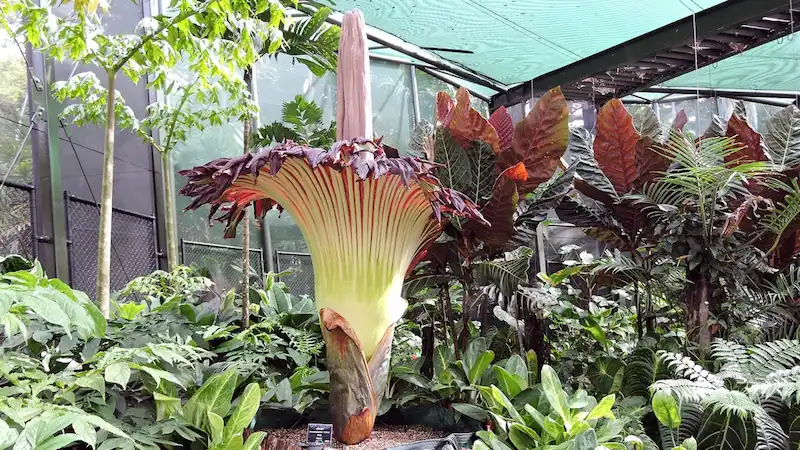


In the Australian city of Geelong, a rare and unusual event has captivated thousands of visitors as they flock to witness the blooming of the notorious "corpse flower." Named Amorphophallus Titanum, this plant is known for its pungent odor resembling that of rotting flesh, designed to attract beetles and flies for pollination.
The anticipation for this event has been building for years, with horticulturalists closely monitoring the plant for signs of blooming. Finally, in 2021, the Geelong Botanic Garden received the plant as a gift from the State Herbarium in Adelaide, South Australia, sparking excitement among locals and botany enthusiasts alike.
As the plant began to bloom on a Monday, the city was abuzz with curiosity and revulsion, drawing in around 5,000 visitors on the first day alone. The putrid smell, likened to that of a decomposing possum or a stagnant pond, only added to the intrigue surrounding this rare botanical spectacle.
Despite the overwhelming stench, the crowds continued to pour in, eager to catch a glimpse of the corpse flower in all its blooming glory. The botanic garden remained open around the clock, offering a live stream of the event that attracted viewers from across the globe.
Visitors returned multiple times to witness the various stages of the plant's blooming process, from the slow unfurling of its leafy base to the eventual closure around the tall spadix at its center. This engagement with nature's fleeting marvel underscored the importance of botanic gardens in preserving and showcasing unique and endangered plant species.
The Titan Arum, native to Indonesia and listed as endangered on the IUCN Red List, faces threats from habitat destruction and deforestation. With only a few hundred plants remaining in the wild, efforts to conserve and propagate the species have become crucial in ensuring its survival.
Amidst the crowds and the overpowering stench, the blooming of the corpse flower in Geelong served as a reminder of the delicate balance between human impact and the preservation of our natural world. As visitors marveled at this fleeting spectacle, they also paid tribute to the enduring beauty and resilience of a plant that thrives against all odds.