


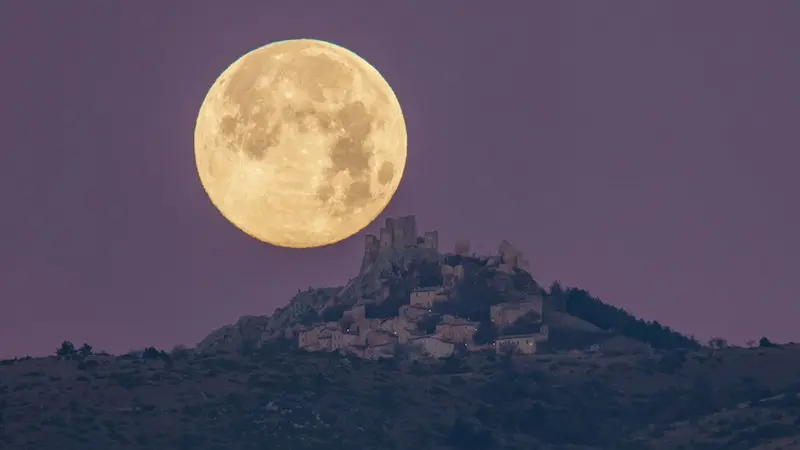


As the chilly winter nights lengthen, sky gazers in the Northern Hemisphere are in for a dazzling treat this weekend as the last full moon of the year graces the heavens. Known as the long night moon or the cold moon, this silvery orb will illuminate the sky for over 16 hours from Saturday evening into Sunday morning, reaching its peak brilliance at 4:02 a.m. ET on Sunday.
While the cold moon may appear round for about three days, its symbolic significance is not lost. According to The Old Farmer’s Almanac, this lunar event holds various names, capturing the essence of the bitter winter weather typically experienced in the Northern Hemisphere at this time. Derived from the Mohawk people and other historical sources, each full moon carries a unique name tied to Native American or Colonial American heritage.
For those residing in the Southern Hemisphere, the December full moon offers a sight to behold albeit for a shorter time and with a lower arc in the sky. Sara Russell, a distinguished research scientist, explained that due to the alignment of the sun, moon, and Earth, viewers in the Northern Hemisphere will witness the moon's ascent higher in the sky than expected against a wintry backdrop.
To catch the cold moon at its most magnificent, experts recommend observing its rise and set when it's near the horizon, enveloped in layers to combat the cold winter night. With clear skies and a keen eye, this celestial spectacle provides an opportunity to reflect on the mysteries and wonders of our closest cosmic companion.
The moon, a resilient witness to billions of years of cosmic history, serves as a reminder of the Earth's enduring connection to the vastness of space. As we marvel at its cratered surface, pondering the possibilities of lunar exploration and habitation, the cold moon invites contemplation of the mysteries that linger, waiting to be unraveled.
As the December full moon aligns with the approach of the winter solstice, another celestial event looms on the horizon. The winter solstice, marking the longest night in the Northern Hemisphere and the shortest day in the Southern Hemisphere, is set for December 21. The following celestial events, including the wolf moon in January and upcoming meteor showers, offer a glimpse into the ongoing dance of the cosmos, a mesmerizing spectacle that continues to captivate and inspire all who gaze skyward.