


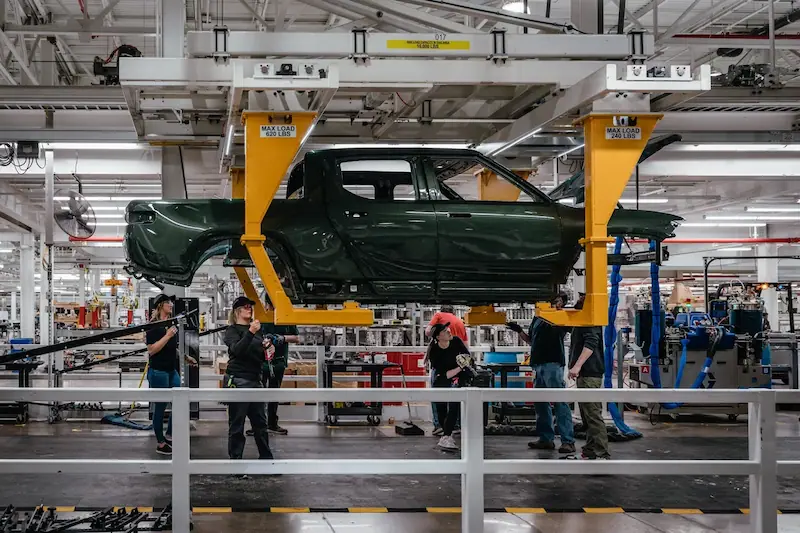


In a recent development, the United Auto Workers (UAW) and Rivian Automotive Inc. have reached a confidential agreement with provisions that could potentially make it easier for workers at Rivian's Illinois factory to unionize. The agreement includes a commitment from Rivian to adopt a neutral stance towards any unionization efforts by its workforce, but only once the company achieves certain profitability metrics. While the specific details of these metrics remain undisclosed, insiders familiar with the matter revealed this information on the condition of anonymity.
This newfound neutrality commitment could mark a significant step towards the UAW's longstanding efforts to unionize workers within the electric vehicle industry, with Rivian being a prime target. However, the prospect of Rivian achieving profitability has been challenging, as the company has yet to report a quarterly adjusted profit due to supply chain issues and a slowdown in EV demand.
The agreement between Rivian and the UAW, if it comes to fruition, could hold particular significance under the incoming administration of President-elect Donald Trump, which is anticipated to be less favorable towards unions compared to the current administration under President Joe Biden.
Neutrality agreements like this one are instrumental in creating a level playing field for workers to decide on union representation without fear of reprisal. According to experts, such agreements provide employees with a sense of security in making their choice and indicate a commitment to following legal guidelines.
While this deal could potentially clear the path for UAW to organize Rivian's workforce, its enforcement may pose challenges in the future if interpretations of the terms differ between the parties involved. Additionally, the agreement has played a role in facilitating a conditional loan of up to $6.6 billion from the US Energy Department for Rivian's new EV plant in Georgia, pending fulfillment of specified requirements.
Despite Rivian's positive outlook on achieving a positive gross profit margin in the near future, there is no certainty that the company will meet the criteria outlined in the agreement to support unionization efforts. However, if successful, unionizing Rivian could set a significant precedent in the EV industry and elevate labor standards in non-union auto factories.
The UAW's continued efforts to organize Rivian, coupled with ongoing investigations into alleged labor law violations, highlight the importance of upholding workers' rights and ensuring fair working conditions within the rapidly evolving EV sector. A potential unionization at Rivian would not only empower workers but also impact various aspects of the company, from pay negotiations to safety protocols, and could potentially shape Rivian's brand identity in the competitive EV market as a worker-friendly alternative to industry giants like Tesla.