


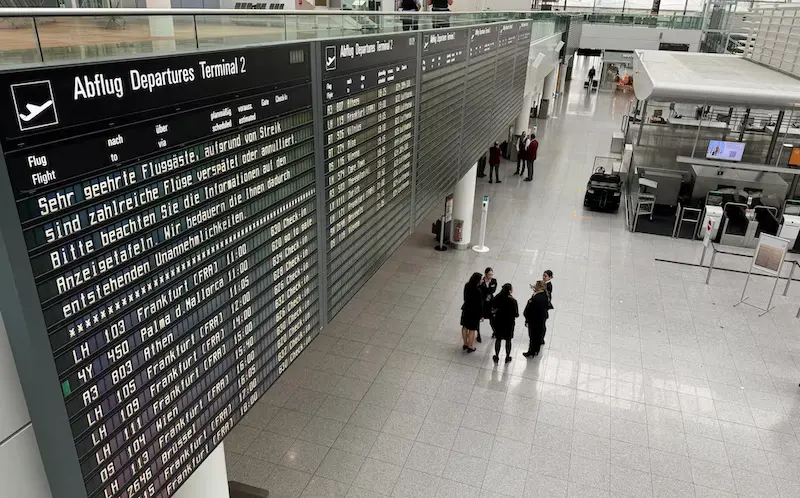


Amid ongoing negotiations between the trade union Verdi and employers in the public sector and ground handling, a 24-hour strike has been called for Monday, impacting over half a million passengers and resulting in the cancellation of more than 3,400 flights. This escalation follows previous walk-outs last month, underscoring the intensity of the conflict.
The Association of Germany's Airport Operators ADV has warned of a near-complete shutdown of air traffic in the country, labeling the strike as a "horror scenario" for affected passengers. Travel plans are in disarray, and the economy is set to feel the repercussions of this widespread disruption.
Frankfurt Airport, the nation's primary hub, has indicated that departures will likely come to a standstill on Monday. Advice is for passengers to avoid heading to the airport and for those connecting through Frankfurt to monitor their airline's updates closely. This move is part of a coordinated effort that will see airports such as Munich, Stuttgart, Cologne/Bonn, Duesseldorf, and others impacted by the strike.
While Germany's air traffic control operator, DFS, is not directly involved in the strikes, its operations may still be affected. Verdi's demands for an 8% wage increase or a minimum of 350 euros per month, along with improved benefits and more time off, demonstrate the union's resolve in advocating for its members' rights.
Employers have deemed the union's demands unsustainable, setting the stage for further negotiations scheduled toward the end of the month. As the strike progresses, it is clear that the standoff between labor and management shows no signs of abating, leaving both travelers and the aviation industry in a state of uncertainty and chaos.