


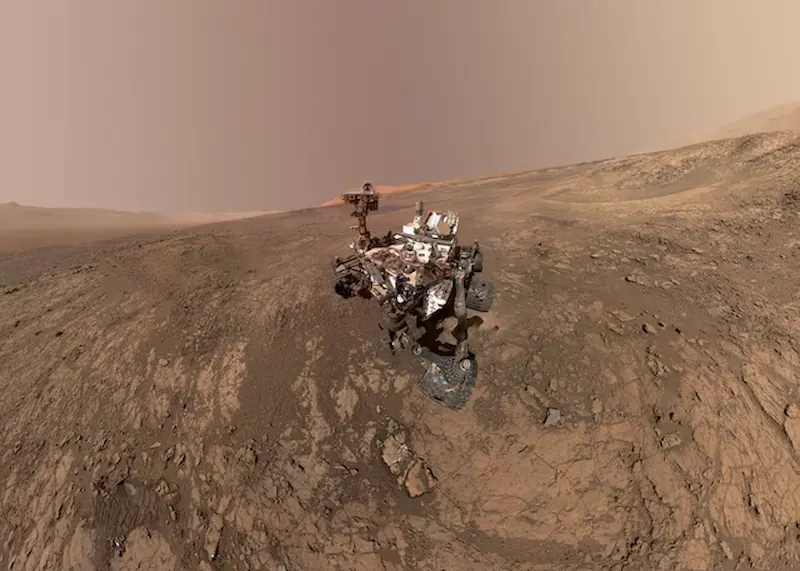


New findings from NASA's Curiosity rover on Mars have unearthed a fascinating chapter in the planet's history, shedding light on its once warm and watery past. Siderite, an iron carbonate mineral, has been discovered in rocks within Gale crater, hinting at a time when Mars possessed a thick atmosphere laden with carbon dioxide. This greenhouse gas would have played a crucial role in heating the planet, allowing liquid water to exist on its surface and potentially creating habitable conditions for microbial life.
The presence of siderite in sedimentary rocks, formed billions of years ago, points towards a significant transformation in Mars' climate. It is believed that the gradual thinning of the atmosphere, which was once carbon dioxide-rich, led to the entrapment of carbon in the planet's crust in the form of carbonate minerals. Previous observations had hinted at the existence of ancient water bodies on Mars, but the scarcity of carbonate minerals had remained a puzzle until now.
By drilling into rocks at three locations within Gale crater and analyzing the samples for siderite content, Curiosity has provided valuable insights into Mars' carbon cycle. The abundance of this mineral suggests that large deposits of carbon-rich materials may still be hidden within Martian rock formations, offering a missing link in understanding the planet's climatic evolution.
The transformation that Mars underwent - from a potentially habitable environment to its current barren state - remains a mystery. The drastic change in its atmosphere, from thick and carbon dioxide-laden to thin and devoid of this gas, has puzzled scientists. Discovering the significant reservoir of carbon stored in rocks on Mars raises essential questions about the planet's carbon cycle and the processes that have shaped its climate over billions of years.
This new perspective on ancient Mars opens avenues for refining climate models and exploring the impact of the imbalanced carbon cycle on the planet's habitability. Unraveling the mysteries of Mars' past could provide valuable lessons for understanding planetary evolution and climate dynamics, both on our neighboring Red Planet and here on Earth.