




In a staggering turn of events, the lights flickered back on after half a day of darkness, yet the true cause of what sparked one of Europe's most severe power outages remained shrouded in uncertainty. Over six days have passed since 55 million individuals in Spain and Portugal were abruptly plunged into a state of powerlessness, unable to access their mobile devices. Despite the passage of time, a comprehensive explanation for the outage has eluded authorities, leaving the public, investors, and energy experts in a state of perplexity and speculation.
Spanish Environment Minister Sara Aagesen divulged that all potential causes are currently under scrutiny, emphasizing the need to avoid drawing premature and simplistic conclusions regarding the unprecedented event. Notably absent from the discourse is any attribution of blame to Spanish Prime Minister Pedro Sanchez's decision to transition away from nuclear energy and towards renewables, a move underscoring the nation's commitment to sustainable power sources.
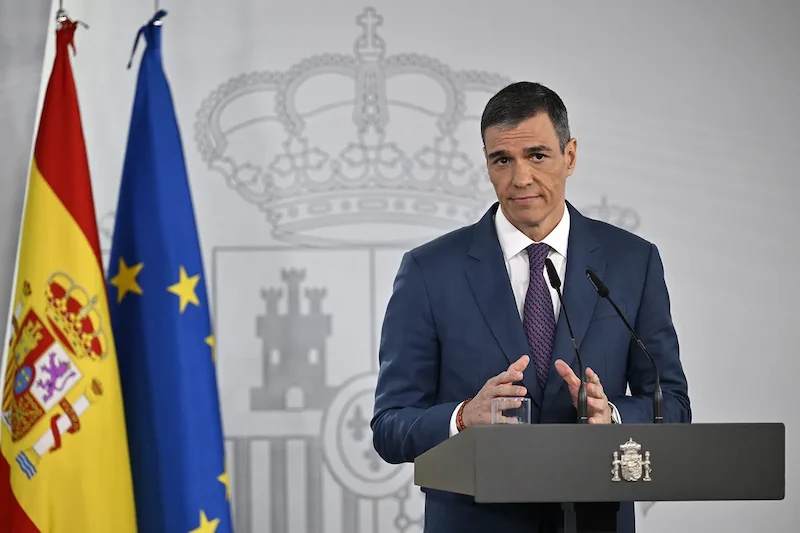
As investigations continue, the government has intently focused on power companies and the grid operator, steering the narrative away from implications of their renewable energy strategy. Prime Minister Sanchez underscored a demand for accountability from private operators, alluding to prior confrontations over taxation. Amidst the range of hypotheses, the possibility of a cyberattack, internal sabotage, or breakdown within the European network has not been ruled out.
Amidst the aftermath, Beatriz Corredor Sierra, chairwoman of Spain's power grid operator, staunchly defended the nation's electricity network, touting its resilience despite the recent outage. However, questions surrounding Sierra's impartiality, given her political background, are mounting. As Spain enters a long weekend, the hope is that the blackout will gradually dissipate from public consciousness.
Feedback from a public poll underscores dissatisfaction with the government's handling of the blackout, revealing a lack of transparency in the information provided. Though the outage did not result in widespread chaos, it has cast doubt on Spain's reputation as a renewable energy success story and exposed vulnerabilities within the European power grid.
As pressure mounts on Prime Minister Sanchez, opposition parties are seizing the opportunity to criticize his leadership during the crisis. With calls for accountability directed towards the grid operator, the government's commitment to phasing out nuclear energy by 2035 remains steadfast, despite calls from opposition parties to maintain nuclear energy within the power mix.
Amidst speculation over the blackout's origins, experts suggest that the integration of renewable energy sources, particularly solar, may have contributed to the grid instability. However, Prime Minister Sanchez is quick to refute this hypothesis, underscoring the complexity and enigma surrounding one of Europe's most significant power outages in recent memory.