


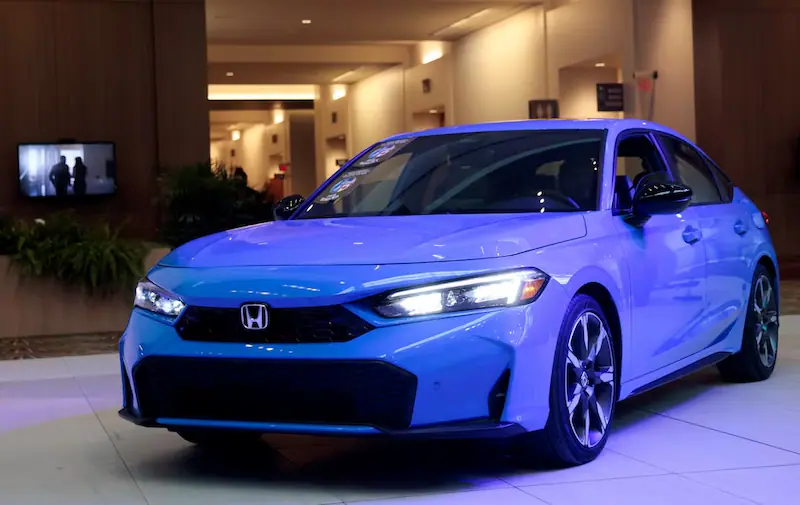


In a strategic move reflective of shifting market trends, Honda Motor has announced a reevaluation of its investment in electric vehicles (EVs) to prioritize hybrids, which are currently enjoying higher demand. The automaker, ranking second-largest in Japan after Toyota Motor, has revised its target for EV sales to 20% of its total sales by the 2030 financial year, down from an initial goal of 30%. CEO Toshihiro Mibe explained during a press conference that the adjustment was prompted by the current market landscape, predicting EVs to make up approximately a fifth of sales by 2030.
Honda has taken a significant step by reducing its planned investment in electrification and software by 30%, amounting to 7 trillion yen ($48.4 billion) by 2030. This repositioning aligns with the broader trend in the automotive industry, where several global brands are reining in their EV investments due to the increasing preference for hybrids and alterations in government regulations aimed at achieving emission targets.
Furthermore, with U.S. President Donald Trump's recent revocation of an executive order that aimed to mandate all new vehicles sold in the United States by 2030 to be electric, Honda's decision appears to echo industry-wide shifts. The company plans to introduce 13 next-generation hybrid models globally from 2027 onwards, indicating a significant pivot towards hybrid technologies.
Despite the retrenchment in EV investment, Honda remains committed to sustainable mobility solutions. The automaker still intends for battery-powered and fuel-cell vehicles to constitute all of its new car sales by 2040, underscoring a dedication to environmental consciousness. By aiming to sell 2.2 million to 2.3 million hybrid vehicles by 2030 – a substantial increase from the 868,000 hybrids sold in the previous year – Honda is signaling its willingness to adapt to evolving market dynamics.
The decision to pause a C$15 billion plan to establish an EV production facility in Ontario for two years highlights Honda's responsiveness to market demand dynamics. Concurrently, the company's commitment to releasing hybrid models and expanding its hybrid offerings for larger vehicle segments underscores a strategic approach to meet evolving consumer preferences.
As Honda realigns its strategy in response to market fluctuations, it joins a cohort of automakers, including Nissan and Jaguar Land Rover, who have also adjusted their EV investment plans to navigate the changing automotive landscape. The automotive industry's transition towards electrification continues to evolve, prompting players like Honda to carefully calibrate their strategies to ensure competitiveness in a rapidly changing market.