


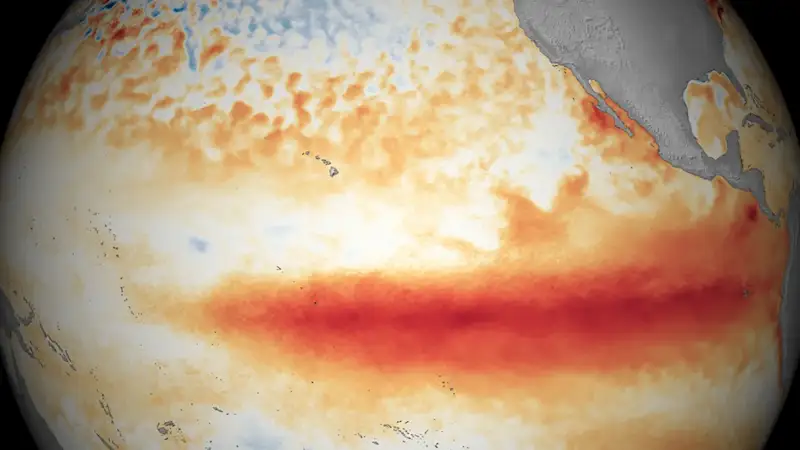


Global temperatures are set to exceed the critical 1.5°C threshold above pre-industrial levels for the first time, according to the World Meteorological Organization (WMO). This is primarily due to the emission of heat-trapping gases from fossil fuels and an impending El Niño. While this breach may only be temporary, it is a significant signal of the increased acceleration of climate change. The WMO also reported a 98% likelihood that at least one of the next five years, as well as the five-year period as a whole, will be the warmest on record. This is a worrying trend, as countries worldwide pledged in the Paris Climate Agreement to limit global warming to well below 2°C, and preferably to 1.5°C, compared to pre-industrial temperatures. Scientists consider 1.5°C of warming as a key tipping point, beyond which there is a much higher risk of extreme flooding, droughts, wildfires, and food shortages.
The WMO's annual climate update states that between 2023 and 2027, there is a 66% chance that the global average temperature will exceed the 1.5°C threshold for at least one year. WMO Secretary-General Professor Petteri Taalas explains that this report does not necessarily mean that the world will permanently exceed the 1.5°C level specified in the Paris Agreement, which refers to long-term warming over many years. However, the WMO is warning that we will breach the 1.5°C level on a temporary basis with increasing frequency. This temperature increase is due to the rise in planet-heating pollution from burning fossil fuels and the impending arrival of El Niño, a natural climate phenomenon with a global heating effect.
Taalas further explains that a warming El Niño is expected to develop in the coming months, which will combine with human-induced climate change to push global temperatures into uncharted territory. This will have far-reaching repercussions for health, food security, water management, and the environment, and we need to be prepared. The current hottest year on record is 2016, which followed a very strong El Niño event. El Niño tends to ramp up temperatures the year after it develops, which could put 2024 on track to be the hottest year on record.
Humans have already caused around 1.2°C of warming, and despite three years of cooling La Niña, temperatures continue to soar to dangerous levels. The last eight years were the warmest on record. The WMO report states that the chance of temporarily exceeding 1.5°C has risen steadily since 2015 when the chance of breaching this threshold was almost zero. The annual mean global near-surface temperature for each year between 2023 and 2027 is predicted to be between 1.1°C and 1.8°C higher than the 1850-1900 average. This refers to the period before the sharp increase of planet-heating pollution from burning fossil fuels.
Leon Hermanson, a Met Office expert scientist who led the report, warns that "global mean temperatures are predicted to continue increasing, moving us further and further away from the climate we are used to." This is a call to action for governments, businesses, and individuals worldwide to take urgent and significant steps towards reducing greenhouse gas emissions to keep global temperatures below the critical 1.5°C threshold.