


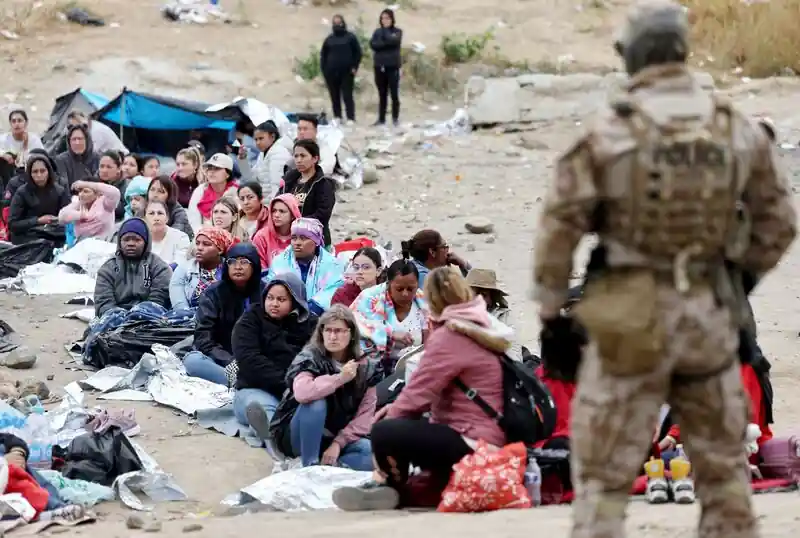


The US Supreme Court has ended a legal dispute regarding pandemic-era border restrictions after the Biden administration revoked the emergency declaration that had formed the legal basis of the policy. The case had arisen from a judge's ruling that the Trump administration had failed to provide an adequate explanation when putting the Title 42 policy in place in 2020. The policy had allowed for the quick expulsion of approximately half of those arriving at the Mexican border.
Previously, the Supreme Court had suspended the decision while it considered whether a group of Republican-led states could intervene in defense of the policy. However, with the border restrictions having ended on May 11th, the court announced that the intervention effort had become obsolete, and as a result, the court set aside a federal appeals court ruling that rejected the request.
The Title 42 policy was a controversial measure that was implemented by the Trump administration in response to the COVID-19 pandemic. The policy allowed officials to quickly expel migrants arriving at the southern border, citing public health concerns. However, many critics argued that the policy was too broad and did not provide adequate protection for vulnerable individuals, including asylum seekers and unaccompanied children.
The Biden administration had faced pressure from human rights groups to end the policy, with many arguing that it violated international law. The decision to revoke the emergency declaration that formed the basis of the policy has been welcomed by many, who argue that it is a step in the right direction towards a more humane and just immigration system.
Overall, the end of the legal dispute over the Title 42 policy marks a significant moment in the ongoing debate over US immigration policy. While the policy may have been intended to protect public health during the pandemic, many argued that it was overly harsh and violated basic human rights. The Biden administration's decision to revoke the emergency declaration and bring an end to the policy is a positive development, but there is still much work to be done to ensure that the US immigration system is fair, just, and humane for all.