


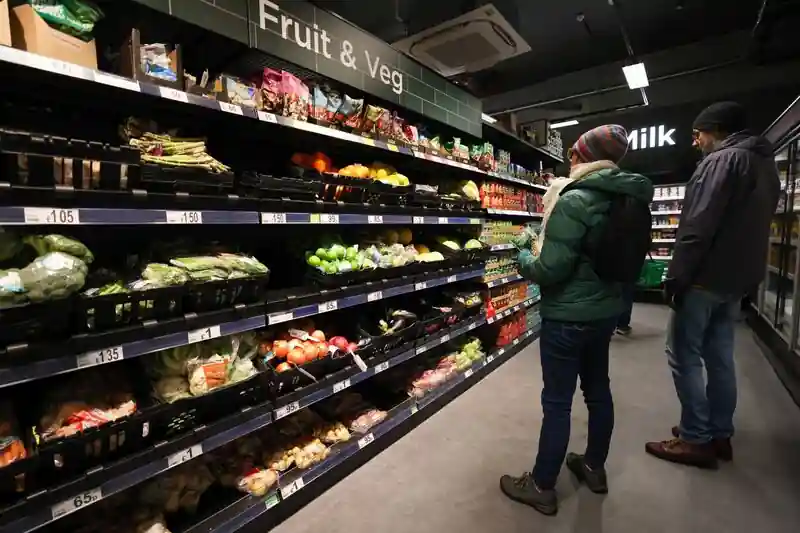


The UK government, led by Prime Minister Rishi Sunak, is reportedly in talks with supermarkets to agree on voluntary price limits for essential food items such as bread and milk in an effort to tackle inflation. The aim is to work together with supermarkets to address the rising cost of living, whilst being careful not to adversely impact suppliers. Health Secretary Steve Barclay explained during an interview on the BBC’s Sunday with Laura Kuenssberg program that this is a constructive discussion “not about any element of compulsion".
Sunak has promised to significantly decrease consumer prices, with the goal of bringing inflation to around 5% by the end of the year, and the proposed measures may be in response to inflation rates that have been defying forecasts for three consecutive months. These rates have been increasing across everyday items such as groceries and mobile phone bills, with the inflation rate reaching 8.7% in April. This figure has dipped slightly but is still higher than the rate at the beginning of the year, with more pressure being placed on the government to combat inflation effectively.
If such a proposal were to be implemented, it would be the most robust attempt at managing prices since the controls established by conservative Prime Minister Edward Heath in the 1970s. The approach has similarities to an agreement made in France, where retailers committed to charging the “lowest possible amount” for specific essential items. Earlier this month, French finance minister Bruno Le Maire revealed that this initiative would be extended, so the effects of such measures can be closely monitored over a significant period. Overall, Sunak and his government remain steadfast in their attempts to drive down prices for consumers, and voluntary price limits on essential food items may be just one of many tactics to be employed in pursuit of this goal.