


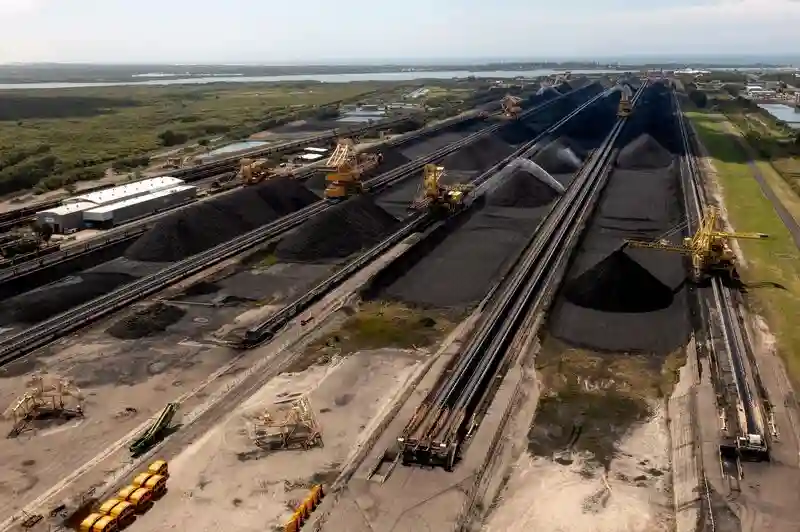


Australia's coal exports are expected to climb over the next three years due to increasing demand from India and Southeast Asia, according to a recent report from Canberra. The report, released on Monday, reveals that both thermal and metallurgical coal shipments will steadily increase in volume until at least 2025. This comes as Chinese imports of Australian coal have also started to rise following the lifting of an informal ban earlier this year.
As the world's second-largest coal exporter, Australia has often faced criticism for its slow progress on climate issues. Although the Labor government under Prime Minister Anthony Albanese has attempted to reposition the country as a clean energy "superpower," it continues to support the growth of the coal and gas sectors.
The report highlights that the largest growth in volume will be seen in thermal coal exports, which are responsible for a significant portion of global carbon emissions. It is projected that thermal coal exports will increase by 7.3% this year. In contrast, metallurgical coal shipments are expected to rise by 2.6%. However, the value of these exports is anticipated to decline as coal prices fall.
Despite the ongoing reliance on coal, exports of other minerals used in the energy transition, such as lithium, copper, and nickel, are predicted to experience substantial growth. Specifically, lithium exports are projected to increase by 20% to 30% annually over the next three fiscal years. Nevertheless, these exports will still pale in comparison to the top three bulk exports of iron ore, coal, and liquefied natural gas (LNG).
Speaking of LNG, the report suggests that overseas sales of this less polluting fossil fuel, which currently serves as Australia's third-largest export, will decline in the year ending June 2024.
Overall, Australia's energy and minerals exports reached a record high of approximately A$460 billion ($305 billion) in the fiscal year 2022-23, largely driven by the commodity price boom resulting from the Russia-Ukraine conflict. Nonetheless, the report predicts a significant decline in the coming years.
Meanwhile, the country's iron ore exports, the primary contributor to Australia's export earnings, are expected to steadily increase over the next three years. This growth can be attributed to the increased production from major mining companies, such as BHP Group Ltd. and Rio Tinto Group, operating in Western Australia's vast iron ore reserves.