


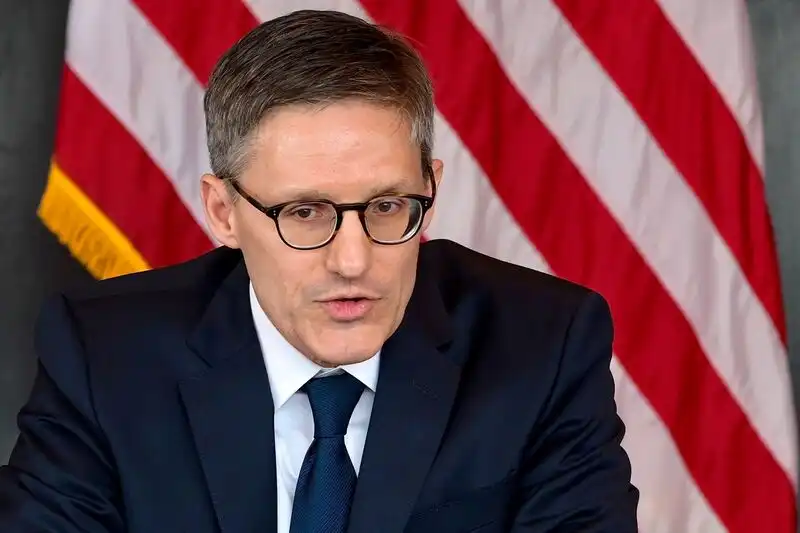


President Joe Biden plans to nominate Derek Chollet, the current State Department Counselor, for the position of undersecretary for policy at the Pentagon, according to sources familiar with the matter. If confirmed, Chollet would be replacing Colin Kahl as the Pentagon's top policy official. Kahl's appointment was narrowly approved by the Senate in 2021, and he had since played a significant role at the Pentagon, regularly testifying to Congress and briefing reporters on various national security matters.
The recent decision by the US to provide cluster bombs to Ukraine, despite concerns about meeting congressional mandates, was one of the issues that Kahl addressed. He stated that President Biden has the authority to waive the restrictions on exporting cluster bombs and would exercise that authority for Ukraine. This move has drawn criticism, as congressional mandates require cluster bombs to have a failure rate of less than 1% for the US to export them.
Both Derek Chollet and Colin Kahl have not responded to requests for comment on the potential nomination. The Pentagon and the White House declined to provide any official statements on the matter. Chollet has a diverse background in foreign policy, having played a key role in overseeing sanctions against Myanmar, working towards political stability in Kosovo, and supporting free elections in Bangladesh.
One of Chollet's notable achievements was his involvement in negotiating a deal with Germany in 2021 regarding the Nord Stream 2 pipeline. The agreement included the threat of sanctions if Russia were to cut gas supplies to Europe through the pipeline. However, this deal became irrelevant when Russia invaded Ukraine, and Germany halted work on Nord Stream 2. Subsequently, there were explosions targeted at both the new Nord Stream 2 and the older Nord Stream pipeline, which the US condemned as acts of sabotage.
It remains to be seen how Chollet's nomination will be received and what his specific policy priorities will be at the Pentagon if confirmed. His experience in foreign affairs and negotiating critical agreements may well play a significant role in shaping the US defense policy moving forward.