


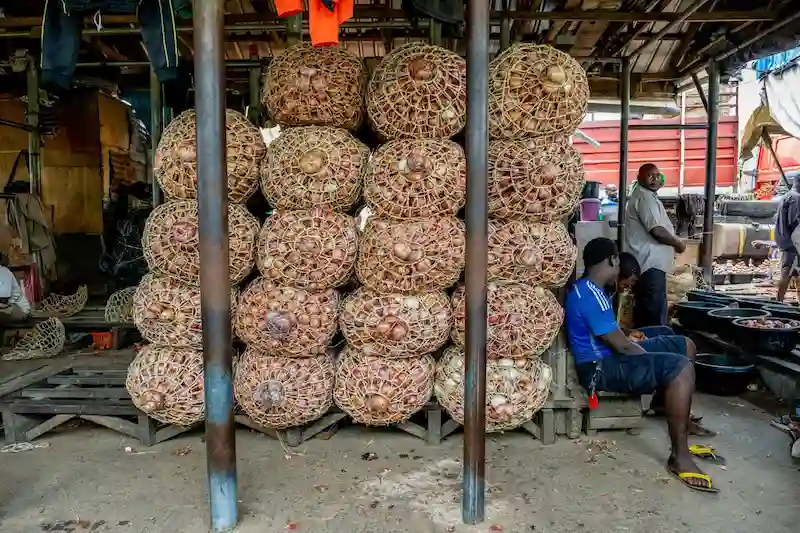


Nigeria has declared a state of emergency to address the mounting issue of food security and supply. The government aims to take extraordinary measures to combat the surging prices, which have caused widespread hardship among its citizens. In response to the situation, President Bola Tinubu's administration plans to clear forests for farmland expansion to increase agricultural output and alleviate food inflation.
This state of emergency follows the removal of fuel subsidies and exchange-rate reform, leading to a 40% depreciation of the Nigerian naira against the dollar after its peg was lifted last month. Even before these reforms, consumer-price growth in Nigeria had already soared to its highest level in nearly two decades, with food inflation rising at an even faster rate.
While these reforms have resulted in economic challenges for the population, they have also led to a rally in the country's dollar bonds and a surge in stock prices. This suggests that investors recognize the necessity of the government's currency decision in order to stimulate economic growth. The World Bank has also predicted that economic growth in Nigeria could accelerate to 4% by 2024, compared to the average 2% seen since 2015.
However, the weakened currency has contributed to the rising cost of living in Nigeria, a country where food expenses constitute a significant portion of household budgets. The International Monetary Fund notes that sub-Saharan Africa, including Nigeria, has experienced a more than 20% increase in food prices between 2020 and 2022, partly due to global trends and the region's heavy reliance on imports for staple foods.
According to the government's spokesperson, Dele Alake, the affordability of food has become a major issue in Nigeria, affecting a majority of the population. This has led to a considerable decrease in food demand and undermined the entire agriculture and food value chain.
To address these challenges, the Nigerian government plans to use the savings from fuel subsidy removal to revamp the agriculture sector. Additionally, emergency measures will be put into action, including the establishment of a National Commodity Board to monitor food costs, maintain strategic reserves, and regulate price fluctuations. The central bank will continue to fund the farming sector, and 500,000 hectares of land, including forested areas, will be made available to expand agricultural output.
However, some experts argue that these measures may not be enough. Ayo Teriba, the CEO of Economic Associates Ltd., suggests that an emergency declaration should encompass all sectors of the economy, including power, security, petroleum, and food. He emphasizes the need for a comprehensive approach to address urgent issues affecting the nation.
It is evident that the removal of fuel subsidies has led to an increase in the cost of living, with food and transportation expenses particularly affected. The situation in Borno State, located in northern Nigeria, provides a glimpse into the emerging price pressures, where food prices rose by 36% and transportation fares by 78% following the subsidy cut. Consequently, hunger has intensified, leading to petty theft and an increase in people resorting to walking long distances due to high transportation costs.
In summary, Nigeria's declaration of a state of emergency underscores the gravity of the food security and supply crisis in the country. The government's efforts to clear forests for agricultural expansion and implement emergency measures indicate a commitment to addressing the escalating food inflation. However, some experts call for a more comprehensive approach to tackle the numerous challenges facing Nigeria's economy.