


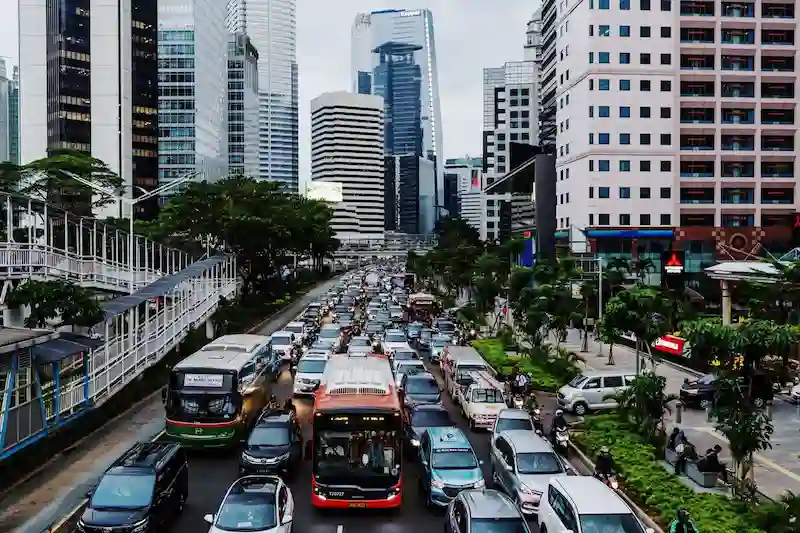


The Indonesian government is considering measures to address the alarming air pollution levels in Jakarta, which reached an all-time high on Sunday, making it the most polluted city in the world. President Joko Widodo is contemplating the implementation of a pollution tax and a mandate that vehicles with a capacity of 2.4 liters or more use the highest grade of fuel available. The deteriorating air quality is primarily attributed to the extended dry season, vehicle emissions, and the emission of fumes from nearby factories, particularly those reliant on coal for power generation.
President Widodo acknowledged the severity of the situation during a cabinet meeting on Monday, stating, "Over the last week, the air quality in the Greater Jakarta Area has been very, very bad." The capital city, home to approximately 10 million people, has long been plagued by air pollution, causing a significant number of residents to suffer from acute respiratory infections each month. In fact, a local court ruling in 2021 recognized the citizens' right to clean air and mandated that the government develop a clear strategy to combat pollution.
Now, President Jokowi is finally urging for decisive action to be taken. He advocates for stricter supervision of industrial sites and power plants and proposes the manipulation of weather conditions to reduce the haze. The government also aims to promote the use of public transportation among civil servants, encouraging them to either utilize public transport or work remotely. Additionally, vehicles will be required to pass emissions tests in order to travel within the Greater Jakarta Area, while power plants and factories will be subjected to tighter industrial chimney standards.
In the long run, the government plans to expedite the transition from combustion engine vehicles to electric ones, as well as increase the usage of electric public transportation. These measures are part of a broader strategy to combat air pollution and improve the overall air quality in Jakarta. By advocating for the use of electric vehicles and encouraging people to utilize public transport more frequently, the government hopes to reduce the detrimental effects of vehicle emissions on the environment.