


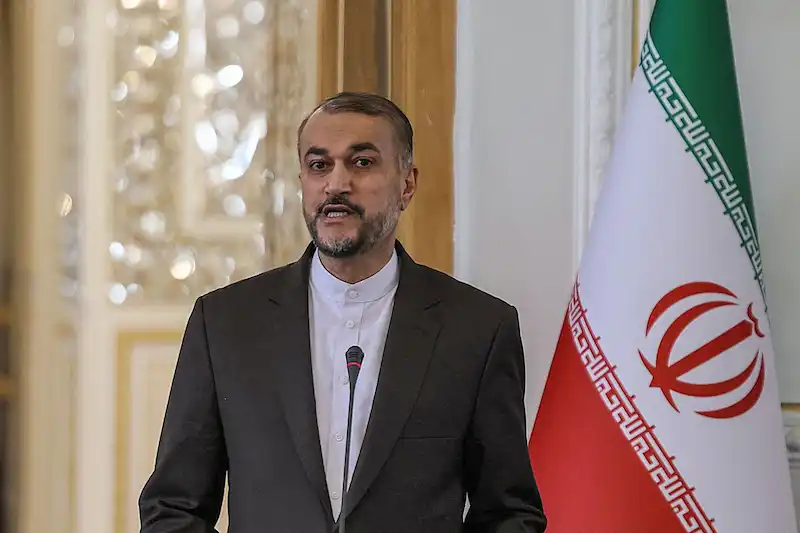


Iran's foreign minister, Hossein Amirabdollahian, embarked on a historic visit to Saudi Arabia, representing the first trip by a top Iranian diplomat to the kingdom in years. This visit comes as both countries strive to ease longstanding tensions and forge a more constructive relationship, with Chinese mediation playing a crucial role.
The visit by Amirabdollahian holds symbolic significance as it coincides with the reopening of diplomatic missions in each other's countries. Accompanied by Alireza Enayati, Iran's new ambassador to Saudi Arabia, Amirabdollahian met with his Saudi counterpart, Prince Faisal bin Farhan, to discuss matters of mutual interest and regional security.
Prince Faisal described the meeting as a crucial step towards implementing the agreement to resume diplomatic relations, acknowledging its historical significance for both nations. The Iranian foreign minister extended an invitation on behalf of President Ebrahim Raisi, expressing hope for an official visit to Saudi Arabia in the near future.
This diplomatic breakthrough is a notable departure from the previous souring of relations between the two countries. The break in diplomatic ties occurred in 2016 after protesters stormed Saudi diplomatic posts. The unrest was triggered by the execution of a prominent Shiite cleric and 46 others by Saudi authorities.
Since then, tensions have escalated over various issues, including Iran's expanding nuclear program and attacks on Saudi Arabia's oil infrastructure. Crown Prince Mohammed bin Salman, who was rising to power during this period, has been a vocal critic of Iran, comparing its Supreme Leader Ayatollah Ali Khamenei to Adolf Hitler and threatening military action against the country.
However, recent events, including the COVID-19 pandemic and the U.S.' abrupt withdrawal from Afghanistan, have prompted Gulf Arab nations, including Saudi Arabia, to reassess their approach towards Iran. In March, Saudi Arabia and Iran reached an agreement, mediated by China, to reopen their embassies.
Despite ongoing conflicts such as the war in Yemen, where Saudi-led airstrikes have significantly decreased, both countries seem committed to exploring avenues of cooperation. The Houthi rebels, backed by Iran, have maintained control over the Yemeni capital, Sanaa.
Moreover, speculation abounds regarding potential Saudi Arabian recognition of Israel, with the U.S. acting as a mediator. While Amirabdollahian did not directly mention this mediation, he reiterated Iran's support for the Palestinians while criticizing Israel's involvement in the region.
The visit by Iran's foreign minister to Saudi Arabia signifies a tangible step towards rebuilding diplomatic ties and fostering regional stability. Both countries have recognized the importance of dialogue and cooperation as they confront shared challenges and work towards a more harmonious Middle East.