




Police have confirmed that the devastating wildfire currently raging on the popular Spanish tourist island of Tenerife was started deliberately, according to the regional President Fernando Clavijo. While three lines of investigation have been opened, it is unclear if any arrests have been made at this time.
Firefighters have made significant progress overnight in their battle to control the blaze, thanks to improved weather conditions. The wildfire has been burning out of control for the past five days, posing a serious threat to both residents and the island's natural environment. Tenerife governor Rosa Dávila expressed her gratitude for the firefighters' hard work, stating that their efforts have yielded positive results.
Although the fire is not near the main tourist areas in the southwest of the island, the regional government has ordered the evacuation of a state-run hotel located in the Teide volcano national park, situated in central Tenerife, approximately 50 kilometers (30 miles) southwest of the fire zone. The number of guests affected by the evacuation is currently unknown.
The Canary Islands, like many parts of mainland Spain, have been grappling with drought conditions in recent years due to changing weather patterns influenced by climate change. The islands have experienced below-average rainfall, exacerbating the risk of wildfires.
According to Dávila, over 12,000 people have been evacuated from their homes since the fire started on Tuesday. The emergency services have reported that the fire has consumed more than 11,600 hectares (29,000 acres) of pine forests and scrubland. Thankfully, no injuries have been reported, and the efforts of the firefighters have successfully prevented any homes from being burned so far.
The severity of the blaze is unprecedented on Tenerife in recent decades and poses a significant challenge to firefighters. The rugged and mountainous terrain makes access to the affected areas extremely difficult. Air quality in 19 towns has been affected, prompting authorities to advise residents to stay indoors as much as possible and wear masks when outside.
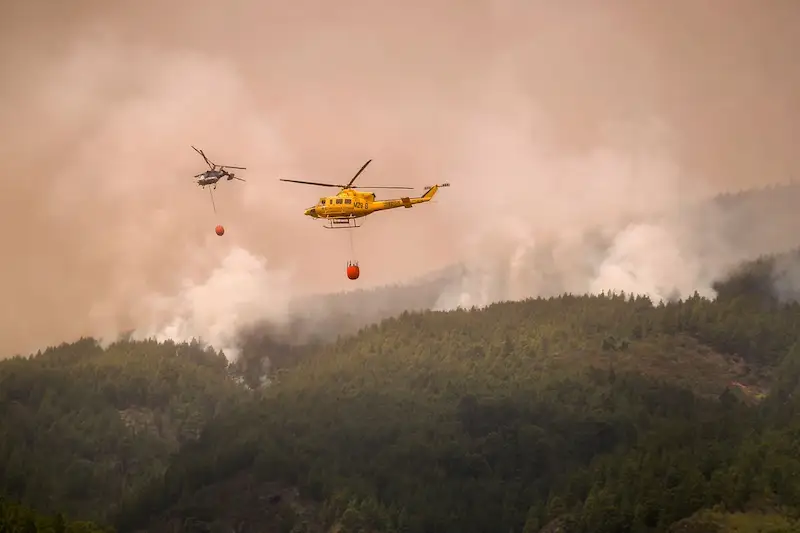
More than 400 firefighters and soldiers, along with 23 helicopters and planes carrying water, have been deployed to combat the fire. However, the situation remains critical as Spain anticipates the onset of another heatwave on the mainland, with temperatures expected to reach 40 degrees Celsius (104 degrees Fahrenheit) later this week.
Spain has experienced a high number of wildfires this year, with approximately 75,000 hectares (185,000 acres) already burned, making it the most affected country in the European Union. The Canary Islands saw over 2,000 people evacuated last month due to a wildfire on the nearby island of La Palma, which affected around 4,500 hectares (11,000 acres).
The seven Canary Islands are located off the northwest coast of Africa, roughly 100 kilometers (60 miles) from Morocco. With ongoing efforts to contain the fire and the support of firefighters and emergency services, authorities are hoping to mitigate further damage and ensure the safety of residents and visitors.