


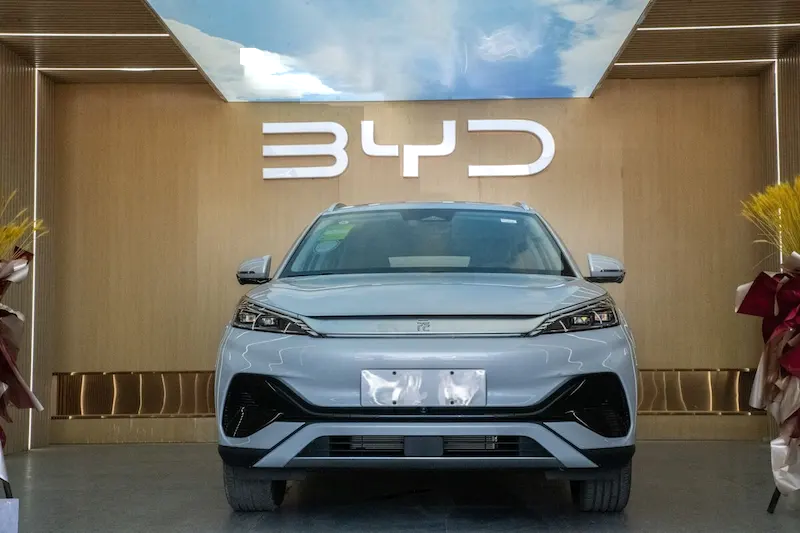


BYD Co., a leading Chinese automaker, reported its slowest revenue growth in over a year, indicating the impact of the intense price competition in China's automobile market. In the second quarter of this year, revenue only increased by 67% to around 140 billion yuan ($17.8 billion), as calculated based on the earnings for the first half of the year. However, the company's net income more than doubled, primarily driven by record sales of plug-in hybrid and fully electric vehicles.
The rebounding sales in China have been a key factor in BYD's financial success, and the company recently announced a preliminary net income of 10.5 billion yuan to 11.7 billion yuan for the first half of this year. Despite the challenging market conditions and continuous discounting strategies, BYD has managed to maintain its position as China's best-selling car brand, surpassing Volkswagen AG in the first quarter.
Traditionally known for offering affordable cars to the mass market, BYD has been expanding its appeal to a wider range of consumers. The company has introduced two luxury brands, Yangwang and Fang Cheng Bao, to cater to the higher-end market segment with EVs priced over 1 million yuan. At the same time, BYD has also launched two more affordable models, the Seagull and Dolphin, which undercut competitors in terms of price.
While BYD remains a dominant player in the market, both foreign rivals and smaller Chinese EV manufacturers are stepping up their efforts to compete, particularly in the areas of smart EVs and autonomous driving technology. Xpeng Inc. recently acquired Didi Global Inc.'s smart car business in a deal worth $744 million, strengthening its position in the intelligent vehicle sector. Xpeng has also secured a $700 million investment from Volkswagen AG, signaling the German automaker's commitment to the rapidly evolving Chinese auto market.
BYD's ability to navigate the challenging price war and adapt its product strategy to cater to different market segments has proven fruitful. As it continues to expand its presence and offerings, the company will need to remain agile and innovative to stay ahead of the competition in the fiercely competitive Chinese automobile market.