


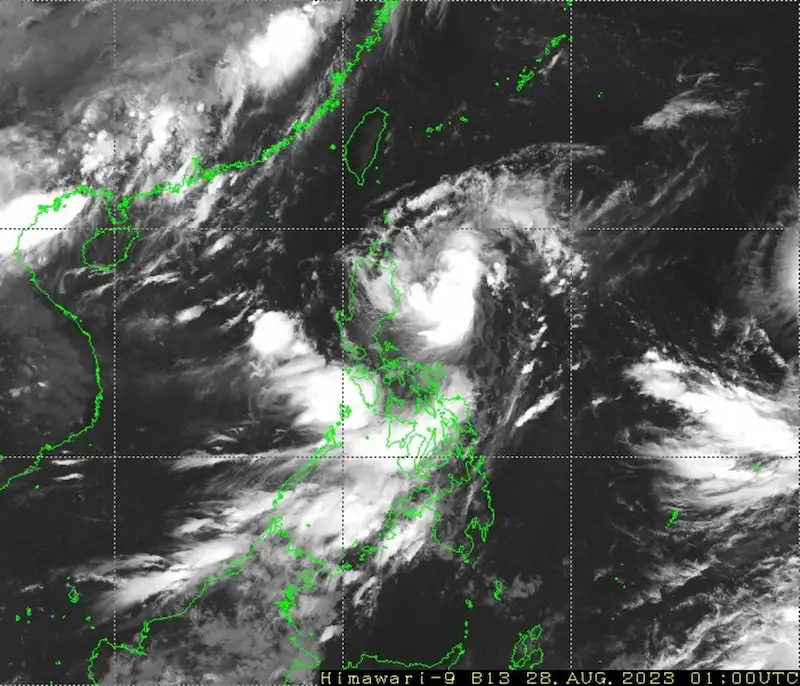


In anticipation of Typhoon Saola's landfall, the Philippines has taken measures to ensure the safety of its residents by evacuating nearly 25,000 individuals to safer areas. The typhoon is expected to hit the country on Wednesday before moving towards Taiwan and Hong Kong.
As a precautionary measure, several domestic flights have been canceled, and some schools have been shut down or had classes suspended on the first day of the school year. The heavy rainfall brought by Saola has intensified the effects of the ongoing southwest monsoon, affecting more than 64,000 people in 21 provinces, as reported by the Philippine disaster management agency.
The state weather bureau, Pagasa, has raised the third-highest wind signal over the northeastern islands of the Philippines, warning of strong winds and potential power disruptions. They also highlighted that Saola is likely to persist in strength as it passes over the northernmost Batanes province and may even re-intensify into a super typhoon. The US Joint Typhoon Warning Center predicts that the typhoon will reach Hong Kong later this week.
Currently, Saola has sustained winds of 155 kilometers per hour (96.3 miles per hour) near the center, with gusts reaching up to 190 kilometers per hour. It is expected to move northwestward until it leaves Philippine territory on Wednesday evening or early Thursday.
In addition to Saola, the Philippines is also monitoring another cyclone, Storm Haikui, which is expected to enter the country on Wednesday. While it is less likely to directly impact the Philippines, it may bring monsoon rains to the northern and central regions.
In Taiwan, authorities have suspended boat operations in Pingtung and are preparing for the typhoon's potential impact. Premier Chen Chien-jen has urged citizens to be prepared and announced that the government has activated contingency plans, including releasing water from reservoirs.
The Philippines has experienced frequent tropical cyclones, with approximately 20 passing through the country each year. This makes it one of the most disaster-prone countries in the world. Earlier this year, Super Typhoon Doksuri wreaked havoc in the northern provinces, causing significant damage to both crops and infrastructure.
As Saola approaches, the Philippines and neighboring regions are bracing themselves for potential destruction and ensuring the safety and well-being of their citizens.