


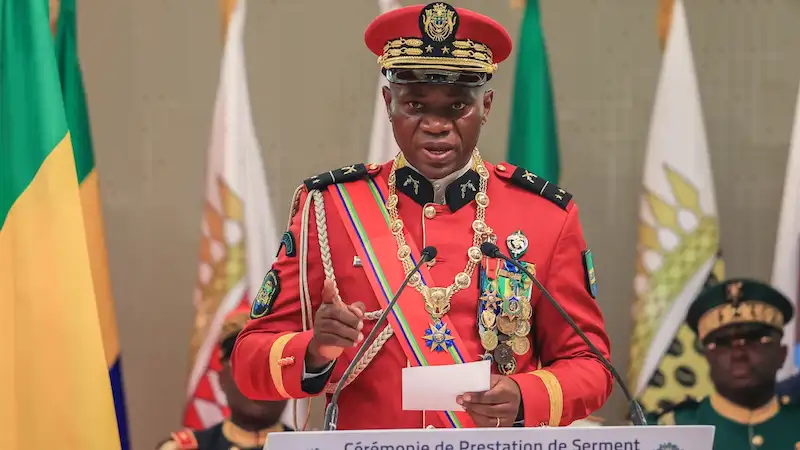


General Brice Nguema, the leader of Gabon's military junta, has been officially sworn in as interim president during a televised ceremony. This comes after the recent coup led by Nguema that ousted President Ali Bongo Ondimba, effectively ending the Bongo family's long-standing dominance over Gabonese politics.
The Bongo family's rule began with Omar Bongo, who governed the country for over four decades until his death in 2009. His son, Ali Bongo, succeeded him and has been in power for nearly 14 years. However, the recent presidential election, which was marred by voting delays and internet cuts, was highly disputed. Despite these controversies, Bongo was declared the winner. In response, the military junta took action, placing Bongo under house arrest, annulling the election results, and closing the country's borders.
The coup has received both global condemnation and local support. Thousands of Gabonese citizens took to the streets to celebrate the military's actions and show solidarity. General Nguema, who previously served as a bodyguard to Omar Bongo, was swiftly installed as the interim leader. During the inauguration ceremony, he was greeted with cheers from his civilian supporters and a military parade.
Ahead of his swearing-in, Nguema authorized the reopening of Gabon's borders and engaged in discussions with political leaders regarding reforms and a transition period. The length of his interim presidency remains uncertain, as he has expressed caution about rushing into a new election to avoid repeating past mistakes.
Meanwhile, a coalition of opposition parties in Gabon has called for the resumption of the electoral process and the completion of the vote count. They argue that this would allow opposition leader Albert Ondo Ossa, who finished as a runner-up in the annulled election, to have a chance at victory.
The coup in Gabon adds to a growing trend of military interventions in former French colonies. In the past three years, countries like Mali, Guinea, Burkina Faso, Chad, Niger, Tunisia, and now Gabon have experienced political upheavals that have undermined democratic progress.
For many Gabonese citizens, the removal of President Bongo represents a significant victory in a country wealthy in oil yet plagued by poverty. They hope that this leadership change will bring about positive change and a more inclusive government for the nation.